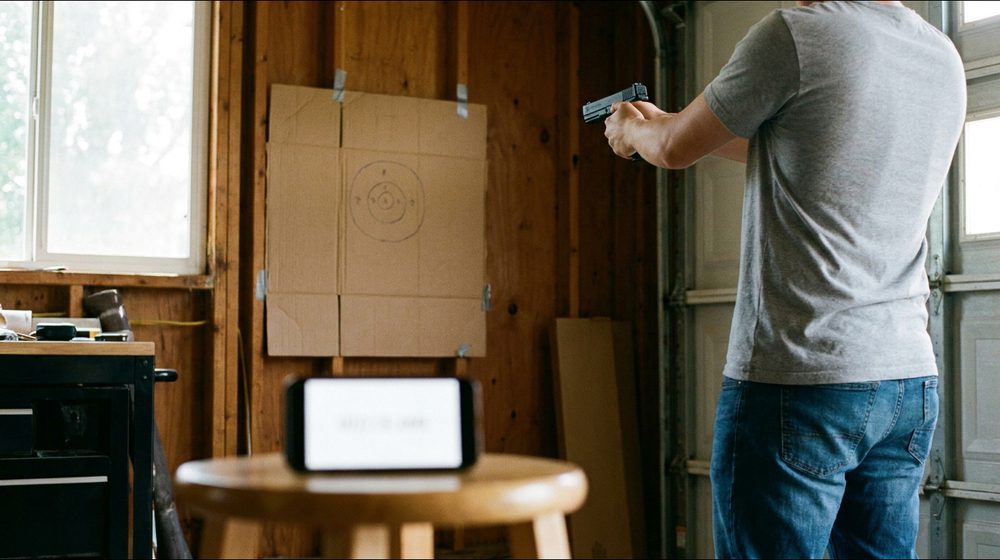
CED7000 Shot Timer Review: Gen-2 Manual & Airsoft Setup
Contents
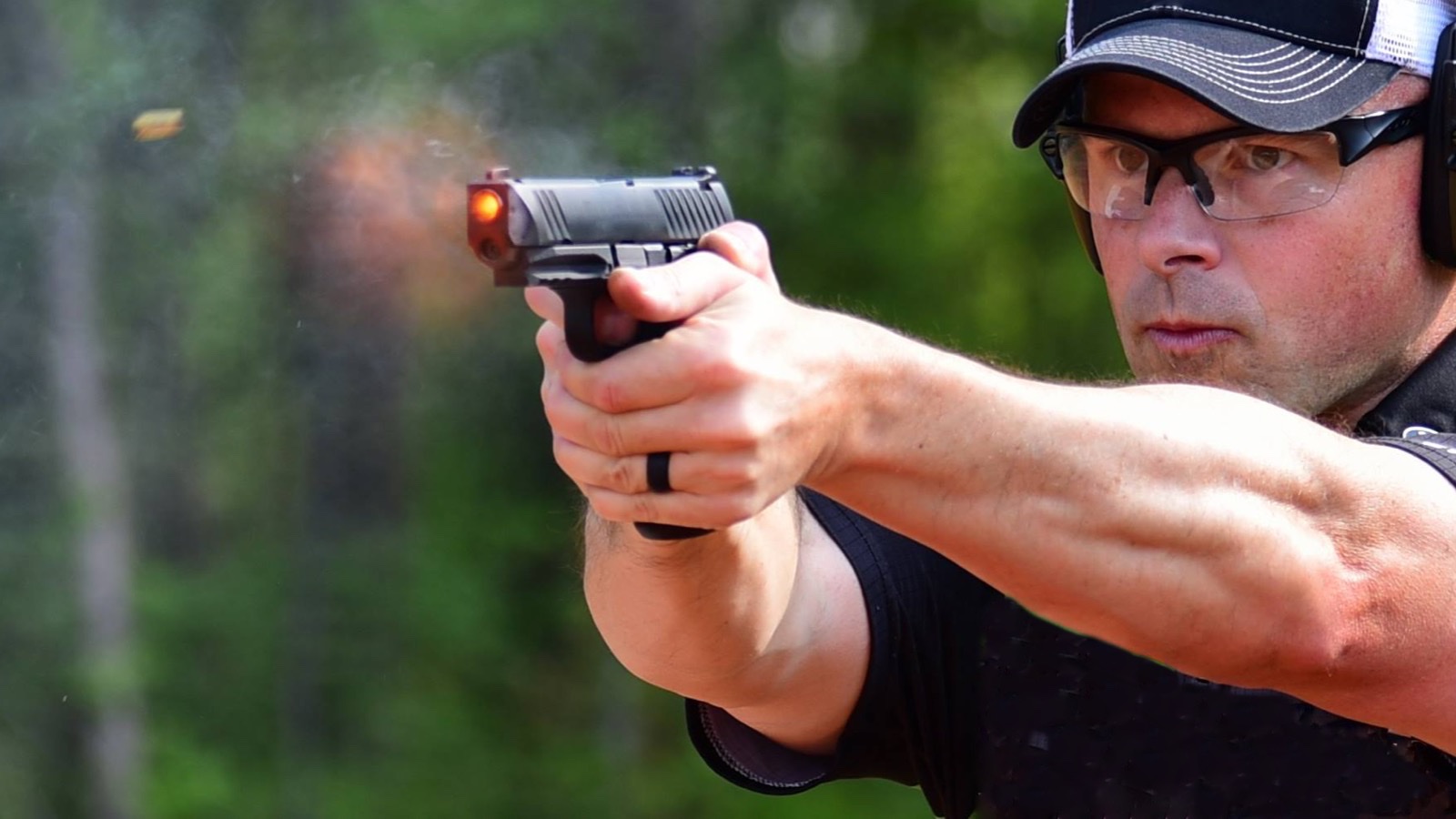
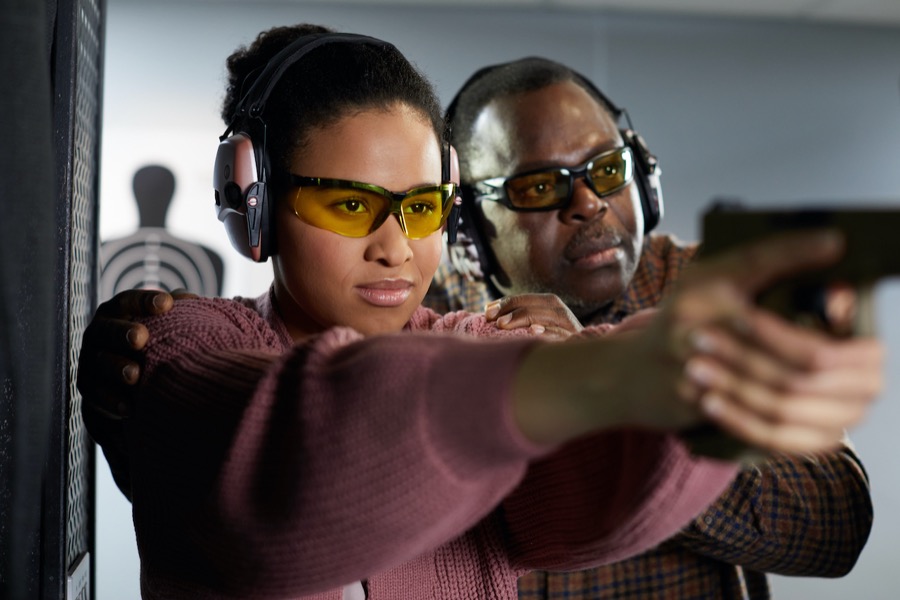
The CED7000 is the small black shot timer you see on more IPSC range officers’ lanyards than any other. The current version, the CED7000 Gen-2, sells for $139.95 in the US (€146.95 from Double-Alpha in Europe) and weighs about 80 g. It runs on an internal rechargeable battery that now charges over USB-C, offers eight microphone sensitivity levels and four start-delay modes, and stores ten strings. There’s no Bluetooth and no app. For airsoft, CED’s own manual says sensitivity levels 7 and 8 pick up most airsoft pistols. The catch is that the manual saying so belonged to the CED7000A airsoft model, which is no longer in the lineup, so with a standard Gen-2 you have to test it on your own gun.
If you’ve just been handed one at a match, or bought one and opened the box, the four arrow keys and the MENU button don’t explain themselves. A popular YouTube walk-through of this timer has “SO confusing at first” right in its title. This guide is the review and the plain-language manual in one place. It’s based on Double-Alpha’s Gen-2 user manual and the older CED7000 manual, including the airsoft page most owners have never seen. It also covers the part of the manual that contradicts itself.
CED7000 vs CED7000 Gen-2: Which One Do You Have?
The Gen-2 is the same timer with four hardware changes. The buttons are rubber instead of hard plastic. The screen protector is Gorilla Glass. The battery grew from 900 mAh to 1,200 mAh. And the charging socket changed from a round barrel pin to USB-C. Menus, modes and accessories carry over, and Double-Alpha says every existing CED7000 accessory fits the Gen-2.
The quickest way to tell them apart is to turn the timer over and look at the bottom. A USB-C port means Gen-2. A small round DC socket means an original CED7000. The original also came in two trims. The standard model has chrome buttons and trim plate, and the CED7000T “Tactical” is all black. Both work the same way.
It matters when buying used. Some dealers, Dawson Precision among them, still list the original at $129.95 next to the Gen-2 at $139.95. The $10 difference buys you USB-C and a larger battery. If the seller can’t tell you which generation it is, ask for a photo of the bottom.
The body is 100 × 47 × 17-18.5 mm (the two manuals disagree by a millimetre and a half). That’s roughly the size of an old candy-bar phone. It sits in a shirt pocket without you noticing, and it’s small enough that an RO can hold it near your shoulder without bumping your elbow on a draw. Two START buttons and two REVIEW buttons, one set on top and one on the front, let you run it with the timer upright in your hand or lying flat on a barricade.
CED7000 Instructions in Plain Language
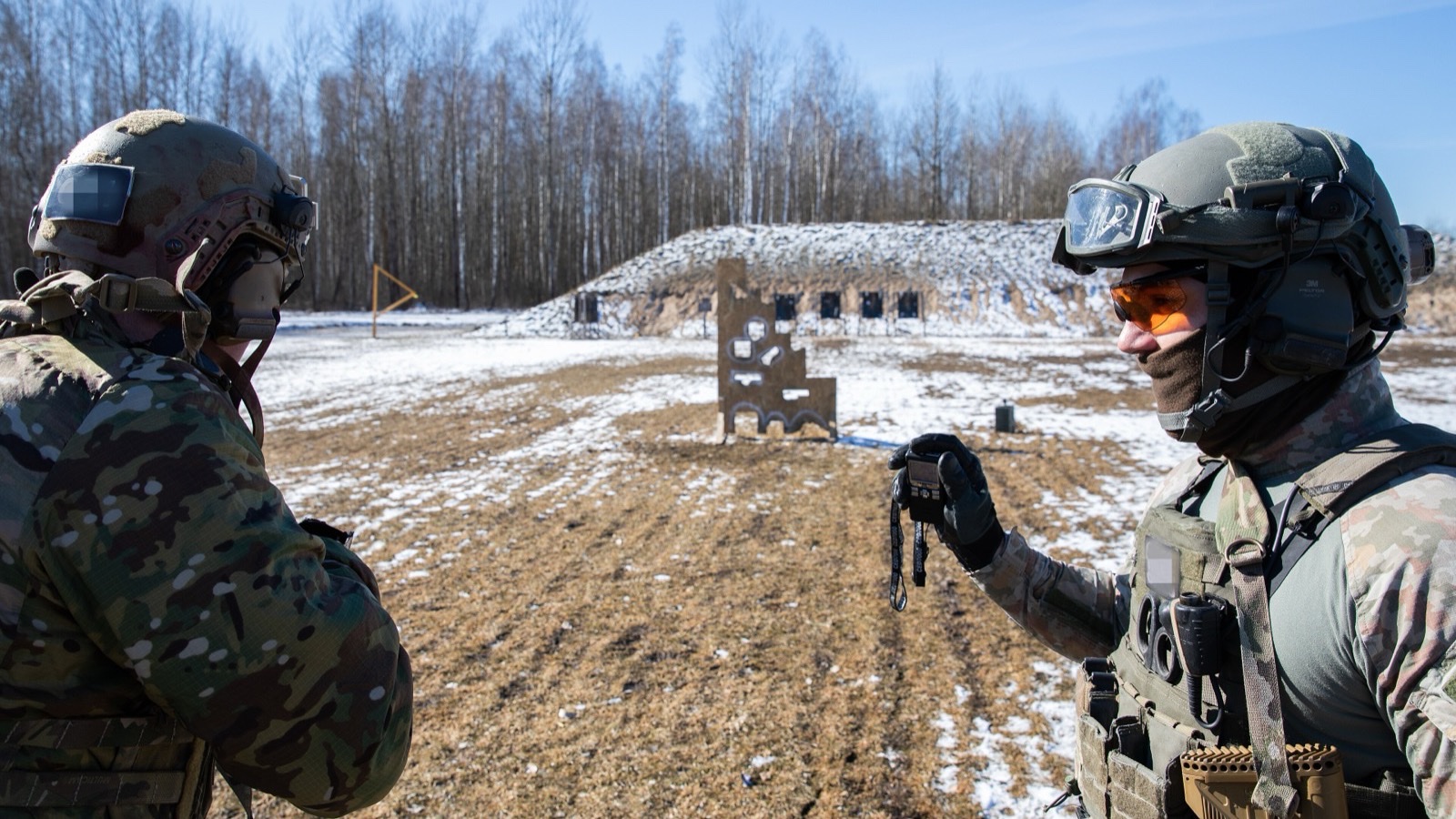
Out of the box, the CED7000 runs in Comstock mode. That’s the IPSC default: unlimited time, unlimited shots, and the final time is your last shot. Most people never need anything else. These are the controls in the order you’ll use them.
Turning it on and off
Hold CLEAR for one second to turn it on, and hold it again to turn it off. The Gen-2 also shuts itself off after 15 minutes without a button press, and nothing stored is lost when it does.
Running a string
Press either START button. After the default 3-second delay the timer beeps, and it starts recording shots. The screen stays blank until it hears the first shot. After that it shows the first-shot time, the shot count, the latest split and the total time, up to 999.99 seconds.
The one thing that trips new owners up is how START behaves when you’re finished. Pressing START a second time stores the current string and begins a new one, but only after you’ve pressed REVIEW. Without that, the timer looks like it’s ignoring you. The lock is there so a bumped button doesn’t overwrite a shooter’s time before it’s scored. If you run drills alone and find it annoying, turn on AUTO-START in the menu and START will restart immediately.
Reviewing shots and strings
Press REVIEW. UP and DOWN step through the individual shots in a string, and LEFT and RIGHT move between stored strings. The newest string is Record #1, and when an eleventh is recorded the oldest is overwritten. To clear everything, for example before passing the timer to the next shooter, go to MENU, then MEMORY STORAGE, then ERASE, and confirm with YES.
Choosing the start delay
MENU, then DELAY, then pick one of four options. Fixed is a 3-second delay. Random is a delay of 2-5 seconds, which is what you want for draw practice so you can’t anticipate the beep. Instant beeps the moment you press START. Custom is any delay you set from 0.1 to 9.9 seconds. Press ENTER to save.
Setting a par time
MENU, DOWN to PAR, ENTER. The leftmost digit is highlighted. RIGHT moves between columns and UP/DOWN changes the value, so a 5.3-second par is “5” in the seconds column and “3” in the tenths. Press ENTER to save. Pars run from 0.60 to 999.99 seconds. The minimum exists because the start beep itself lasts half a second. The par beep lasts 0.30 seconds, and the timer keeps recording shots after it, so you can see exactly how late you were.
Getting back to normal
MENU, then CLEAR MODE, then ENTER. This drops any par or special mode and returns the timer to plain Comstock. If the timer is doing something odd and you can’t remember what you changed, start here. If that doesn’t fix it, MENU, then Default Settings, then YES restores the factory configuration.
The Modes Worth Knowing About
The CED7000 has more modes than most people use, and three of them are good for training.
Multi-Par gives you up to five par beeps from one press of START. The times add up: if you set 1.00, 1.25 and 1.20, the beeps come at 1.00, 2.25 and 3.45 seconds. The first par must be at least 0.60 seconds, each later one at least 0.40 seconds after the previous one, and the maximum is 99.99. The manual suggests it for dry fire, and that’s the right use. Set the first beep as your draw deadline and the second as your reload deadline, and you can practise a draw-and-reload sequence at home without the timer hearing a single shot.
Custom Par and Auto Par each store up to eleven pars. Custom Par needs a press of START for each one. Auto Par runs pars and delays in sequence on its own. A ladder like the Bill Drill at 2.5, 2.2 and then 2.0 seconds can run for a full session without you touching the timer.
Repetitive mode simulates turning targets. You set a face time, an edge time and a number of repeats, and the timer beeps each cycle. The repeats are added to the first cycle, so “3” runs four times. Through the 3.5 mm AUX jack it can also trigger a real turner, a light or an external horn, because the jack outputs 5 V in time with the buzzer.
The rest are niche. Combined Comstock adds times across several starts. Spy Mode records someone else’s run silently: it switches to instant start, raises sensitivity to 7 and mutes the buzzer. Stopwatch and Countdown don’t use the microphone at all. There’s also an alarm clock, and a Self-Check routine that tests every button and display segment, which is worth running after the timer has been dropped on concrete.
Sensitivity and Filter: The Two Settings That Decide What It Hears
Sensitivity has eight levels. Level 1 is the least sensitive and level 8 the most, and the factory setting is 4, which CED calls ideal for most outdoor shooting. Change it under MENU, then SENSITIVITY. The microphone sits just below the display, so the front of the timer needs to face the shooter. The manual says to keep it within six feet (about 1.8 m), with a clear line of sight around walls, and out of the path of ejected brass.
Filter is the setting most owners don’t know about, and it matters a lot for airsoft. It’s a software dead-time after each detected shot. The factory value is 0.08 seconds, so the timer ignores anything less than 0.09 seconds after the previous shot. That’s what stops a berm echo from being counted as a second shot. You can lower it in steps down to 0.02 seconds, at which point the timer can count 33 shots a second. In the manual’s words, a lower filter “may risk detecting echo noise”.
Most problems come down to one of these two settings. If the timer misses shots, raise sensitivity a step. If it records extra shots in a tight indoor bay, lower sensitivity first, and only then change the filter. A 0.09-second split is quicker than almost anyone can shoot a pistol aimed, so with semi-auto you’ll rarely need to touch the filter. Full-auto is a different matter, as the next section explains.
Does the CED7000 Work for Airsoft?
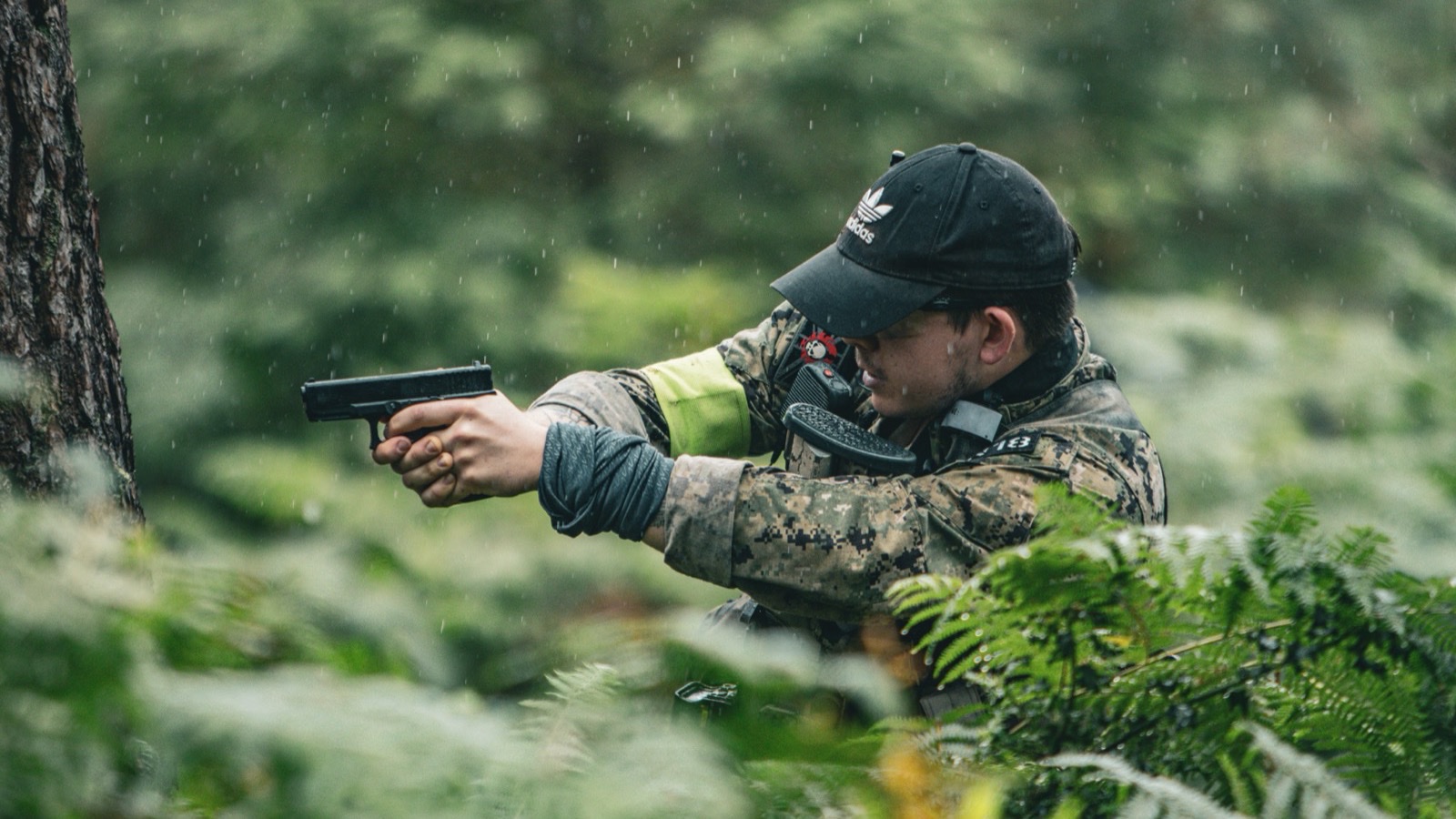
It can, but how well depends on the gun. CED once made a dedicated airsoft version, and that model’s history explains why.
The original CED7000 manual lists a third model alongside the standard and Tactical: the CED7000A Airsoft Timer, with “a modified microphone and buzzer system”. Its page is surprisingly frank. The A model was not for live fire, because its microphone was sensitive enough to pick up echoes. At sensitivity 7 or 8 it would pick up “MOST Airsoft pistols”. At those two levels its buzzer was turned down so that the start beep didn’t register as a shot. And the protective film over the screen and microphone plate had to come off before using levels 7 and 8, because the buzzer vibrating against the loose film was enough to cause false readings.
That model is gone. At least one US retailer lists the CED7000A under discontinued products, and Double-Alpha’s Gen-2 page offers only two versions, with and without RF. The Gen-2 manual doesn’t mention airsoft at all. So if you own a standard CED7000 or Gen-2, you’re using a live-fire timer, and that’s where the problems start. Hardware shot timers are built around the crack of a gunshot. A gas-blowback pistol is far quieter, and an AEG mostly makes a motor whine. Here’s how to give the CED the best chance, and what CED’s own airsoft page suggests you’ll run into.
- Peel off any protective film, and set the buzzer to Soft (MENU, then BUZZER VOLUME). That’s the standard Gen-2’s closest equivalent to the A model’s quieter beep at high sensitivity.
- Set sensitivity to 6 and fire five shots with the timer about a metre away, front panel facing the muzzle. Count what it records.
- If it shows fewer than five, go to 7, then 8. If it shows more than five, or a first shot at a few hundredths of a second you didn’t fire, the beep or an echo is getting through. Go back a step and move the timer further from walls.
- For a GBB pistol, leave the filter at 0.08. The default is there to stop two sounds close together from counting as two shots.
- For an AEG on full auto, the default filter is the problem. Ignoring everything closer than 0.09 seconds means the timer can’t count faster than about 11 shots a second, and many AEGs fire 15-25. The table below shows the filter setting you’d need for each rate, worked out from the manual’s own figures (the filter value plus 0.01 s is the shortest gap the timer will accept):
| Rate of fire | Gap between shots | Filter setting needed |
|---|---|---|
| 11 rps (default limit) | 0.09 s | 0.08 (factory) |
| 15 rps | 0.067 s | 0.05 |
| 20 rps | 0.05 s | 0.04 |
| 25 rps | 0.04 s | 0.03 |
Even with the right filter, an AEG’s motor noise between shots may still read as shots at level 8. Treat full-auto counts as a rough check rather than an exact number.
If most of your training is airsoft, a timer that was built for airsoft will be less trouble. The Airsoft Shot Timer app runs on your phone, is tuned for the pop of a GBB and the cycle of an AEG, and lets you see each split without stepping through menus. If you also shoot Action Air matches, a sensible split is to bring the CED to matches and use your phone for practice at home.
Battery, Charging and Replacement
The Gen-2’s 1,200 mAh lithium battery charges over USB-C in about 3-4 hours. The battery icon has three levels and flashes when it’s time to recharge. The original CED7000 used a round-pin charger and took about 2 hours. CED rated that version at 25 hours of use, or 33 days on standby, per charge. Double-Alpha’s runtime figures for the Gen-2 don’t quite match each other. The manual says 25% longer, the product page says 30%, and the capacity itself is a third larger. Whichever figure is right, it’s an improvement.
Two battery details catch people out. First, the timer draws a little power even when it’s off, to keep the clock and memory running. If it sits in a range bag all winter and the battery runs completely flat, the Gen-2 loses its date and time, and you’ll need to set them again. Stored strings survive as long as the battery stays above 3.6 V. Second, the battery isn’t user-replaceable. The original manual says only the supplied battery and charger should be used, and that the timer should go back to CED or Double-Alpha for a new battery. That’s the answer to the “replacement battery for CED7000” question. It’s a service job, not a part you order and fit yourself. A good way to extend its life is to unplug the charger once it’s full and keep the timer out of a hot car, since CED recommends keeping the battery between 10 and 32 °C.
The Memory Spec the Manual Contradicts
The Gen-2 manual describes memory twice, and the two descriptions don’t agree. On page 3 it says ten strings of 99 shots each, but that anything past 39 shots is saved as shots 1-38 plus the last shot. On page 5 it says ten strings of 100 shots, with anything past 100 saved as shots 1-99 plus the last one. Dealer listings mostly say “10 strings and 99 shots per string.”
For a pistol shooter this almost never matters. An IPSC or USPSA long course tops out at 32 rounds, which is under even the stricter number. It matters if you record long full-auto strings or use the timer for a rifle or multigun stage with a lot of shots. If you need to know, fire 45 shots into a backstop in one string, then step through REVIEW and see which shot numbers it kept. That tells you which page of the manual your firmware follows.
CED7000 Gen-2 vs PACT Club Timer III vs SG Timer GO vs AMG Commander
PACT Club Timer III (about $130). Each of the two does one thing better. The PACT is simpler: no menu, a loud beep, and a 9V battery you can buy at any gas station. The CED has more of everything: delay modes, Multi-Par, a backlit screen, sensitivity in eight software steps instead of a screw under the battery door, and a rechargeable battery. A club that hands its timer to a different RO every weekend may be better off with the PACT. A shooter who trains with pars every week should get the CED. Our PACT Club Timer III review covers its controls in the same way as this guide.
SG Timer GO ($164.99). For about $25 more you get Bluetooth, the Drills app with video overlay and saved history, and a dry-fire mode sensitive enough to hear a striker. The CED has none of those. Its advantages are no phone dependency, the AUX jack for horns and turners, and the BigBoard RF option for match displays.
AMG Lab Commander (about $160-189). This is the USPSA choice because it syncs with PractiScore. If your matches are scored on PractiScore and the squad passes around one timer, the AMG Commander is worth the extra money. If you shoot IPSC, where the CED is the timer most ROs already carry, it isn’t.
If you’re comparing beyond these four, including the IPSC-store Special Pie M1A2+ and the ProTimer, our 2026 shot timer buying guide lists them all with current dealer prices.
The Downsides
The menu is the main complaint, and it’s a fair one. Setting a par takes a five-step trip through the arrow keys, and if you’re half-remembering the steps between relays, it’s easy to end up in the wrong mode. CLEAR MODE fixes that, but only if you know it exists.
There’s also no app, no Bluetooth and no export. Your history is ten strings on a small screen. If you want to track a drill over months, write your times down or use an app. The battery can’t be replaced at home. And dry fire is par-only: a dry trigger press is too quiet for it to hear, which owners regularly ask about in shooting groups. Finally, it’s become harder to find in stock than it used to be. At least one large US practical-shooting shop now lists CED accessories but not the timer itself. It hasn’t been discontinued, but check that the dealer actually has it before you order.
Should You Buy One?
Buy a CED7000 Gen-2 if you shoot IPSC or IDPA live fire, want a pocket-sized timer that never needs your phone, and will actually use par and delay modes. It’s the default at many matches for good reason, and the Gen-2’s USB-C port and larger battery fixed the two things owners of the original complained about most.
Skip it if you mostly train with airsoft or dry fire. For airsoft, a standard Gen-2 is a live-fire timer you’d be pushing to its limit. For dry fire, all you’d use is the par beep. A phone app or a dedicated dry-fire timer covers both for much less, and you can put the money toward a hardware timer later if you start shooting matches.
Frequently Asked Questions
How do I set the delay on a CED7000?
Press MENU, scroll to DELAY and press ENTER. Choose Fixed (3 seconds), Random (2-5 seconds), Instant, or Custom (0.1-9.9 seconds, set digit by digit with RIGHT and UP/DOWN), then press ENTER to save.
How do I set a par time on the CED7000?
MENU, then PAR, then ENTER. Use RIGHT to move between digits and UP/DOWN to set them, then press ENTER. To remove the par, go to MENU, then CLEAR MODE, which returns the timer to Comstock.
Why won’t my CED7000 start a new string?
Press REVIEW first. The timer locks START after a string so a stray press can’t overwrite a score. Turn on MENU, then AUTO-START, if you’d like START to restart immediately.
What sensitivity should I use on a CED7000?
Start at the factory level 4 outdoors. Go down a level or two in small indoor bays where echoes cause extra shots to be recorded. For airsoft, try 6-8, and remove any protective film first.
Does the CED7000 work with airsoft guns?
Often, with gas-blowback pistols at sensitivity 7-8 and the timer within about a metre. AEGs are less reliable, and full-auto needs a lower filter setting. CED’s dedicated airsoft model, the CED7000A, has been discontinued. For regular airsoft practice, an airsoft-tuned shot timer app is easier.
Can I replace the CED7000 battery myself?
No. The battery is internal, and CED’s manual says to return the timer to CED or Double-Alpha for a replacement. Keeping it out of extreme heat and unplugging it once charged will help the original battery last.
How do I tell a CED7000 Gen-2 from the original?
Look at the charging port on the bottom. Gen-2 has USB-C. The original has a round DC socket. The Gen-2 also has rubber buttons and a glass screen protector.
Does the CED7000 have an app or Bluetooth?
No. The only wireless option is the RF version, which sends times to a CED BigBoard display within 30-50 yards. It doesn’t connect to a phone.
Final Thoughts
The CED7000 has been the default IPSC timer for more than fifteen years because it’s small, rechargeable and does what an RO needs. The Gen-2 keeps all of that and fixes the old charger. It’s harder to learn than it should be, but the controls that matter come down to a few things: press REVIEW before START, change settings through MENU, use CLEAR MODE when something looks wrong, and know where the sensitivity and filter settings are.
If you’re timing airsoft or dry-fire practice at home, though, you don’t need a $140 live-fire timer. Start with a shot timer app or our online par timer, and buy hardware when you start shooting matches.
Image Credits
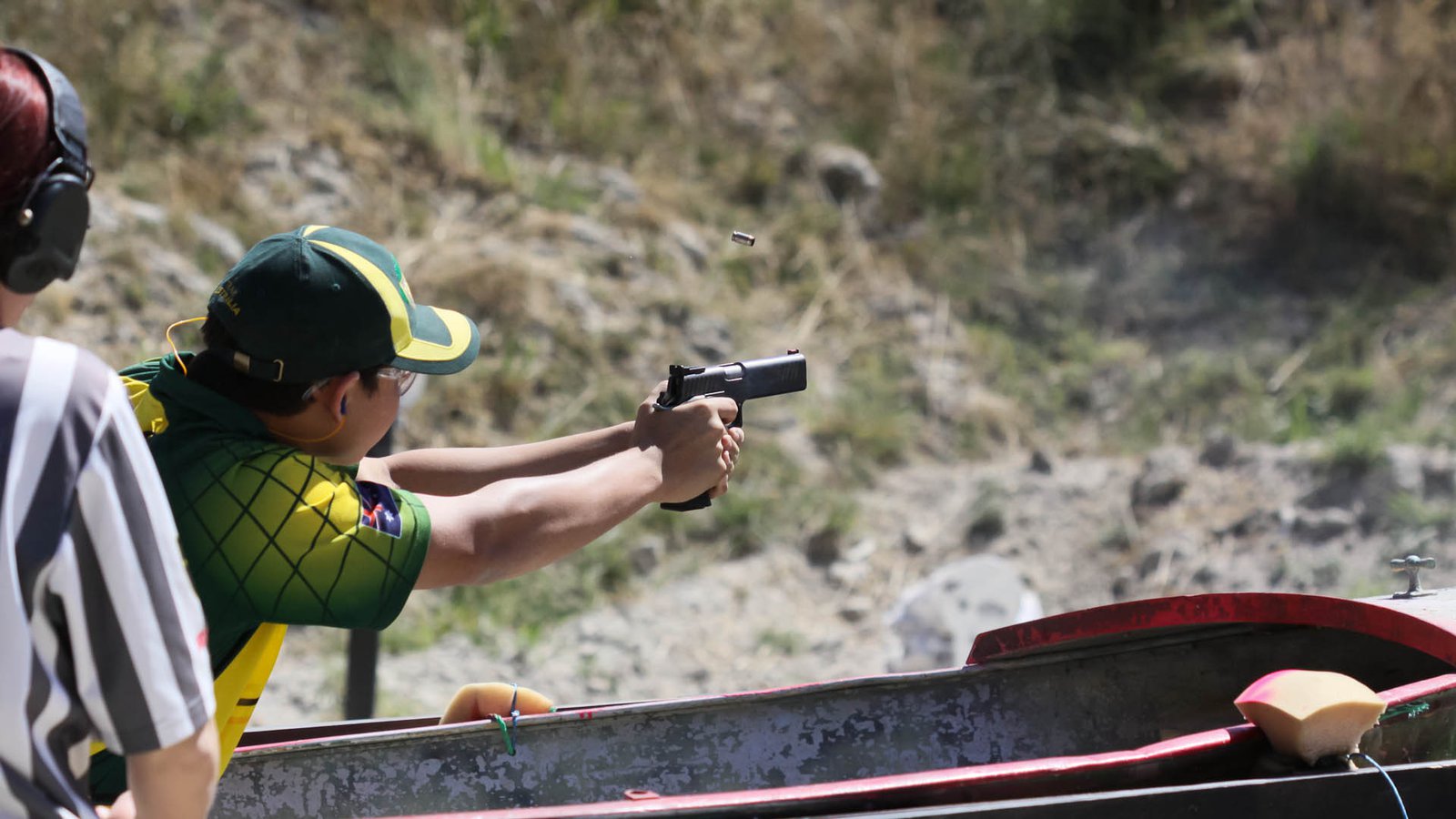
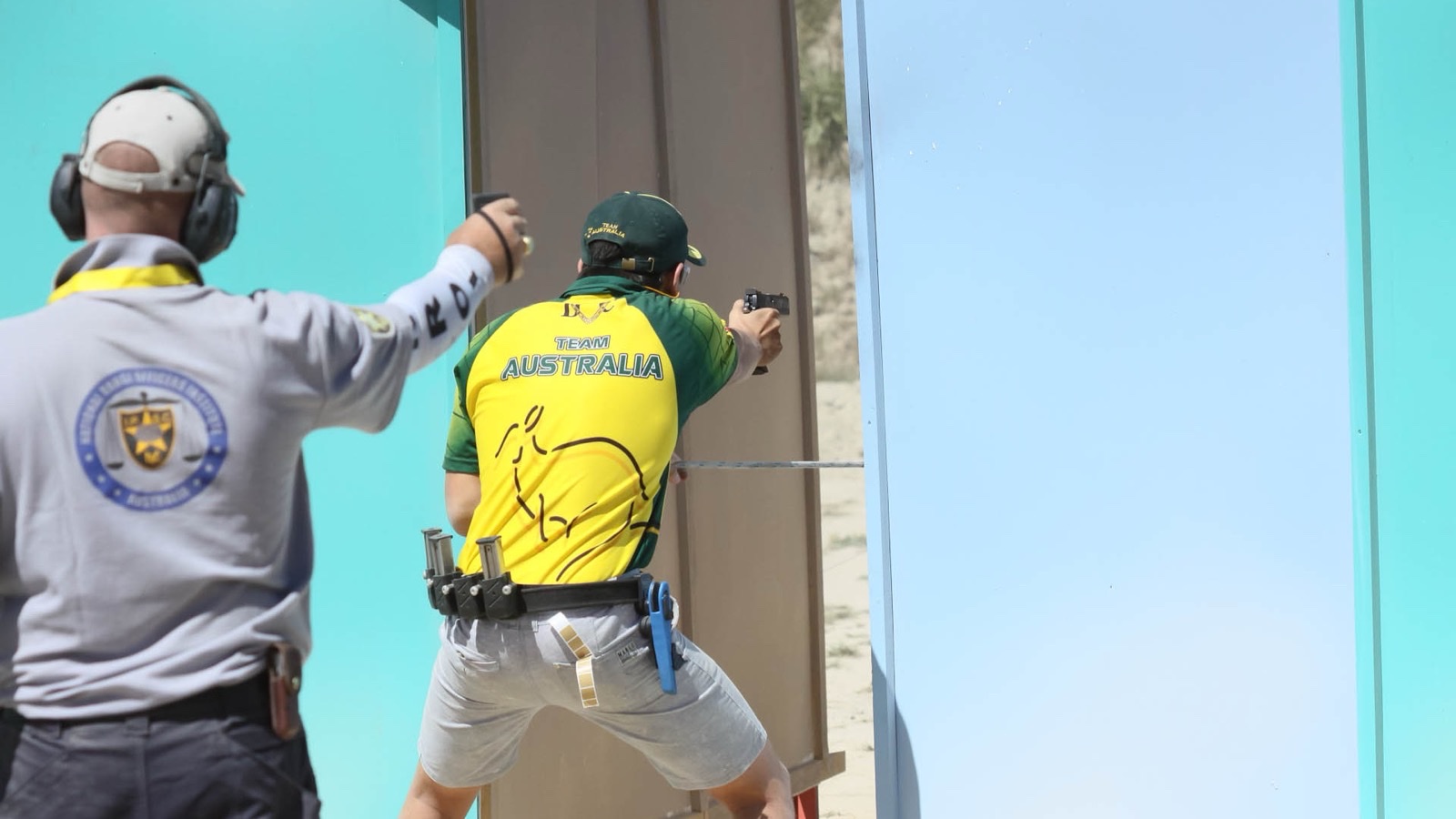
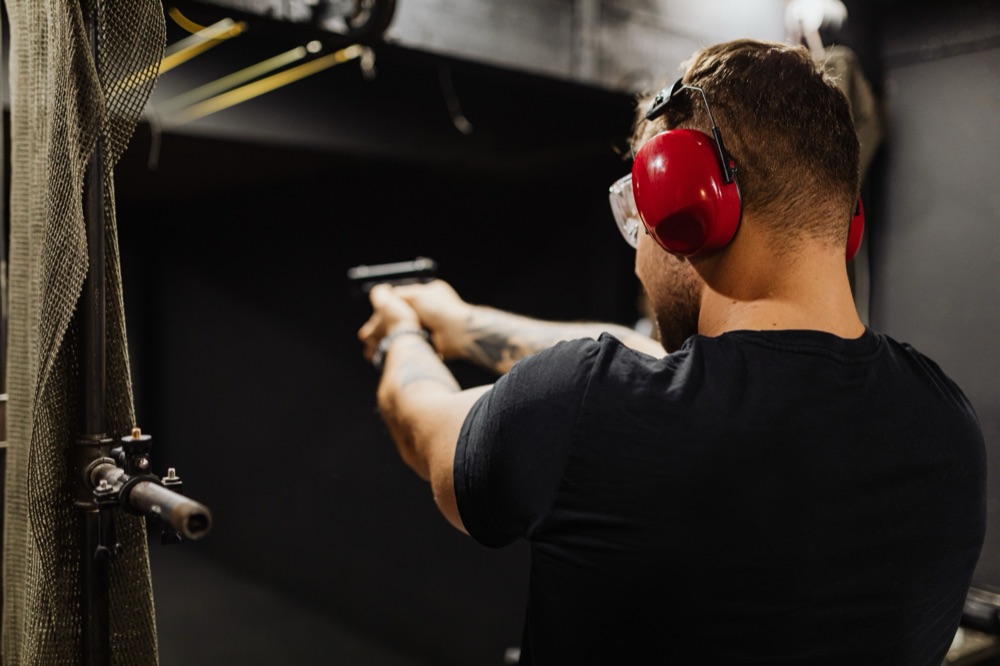
The lanyard photo shows a real CED7000 (the lanyard is printed “CED7000”); its generation can’t be seen from the front. The cover and airsoft photos illustrate the shooting described in the text. Images were cropped and resized to 16:9 and not otherwise altered.
- Cover: Travis Tomasie, Polkzen, CC BY-SA 4.0, via Wikimedia Commons
- U.S. SOF train with Lithuanian forces, Kaunas, March 2022, U.S. Army photo by Spc. Michael Germundson, public domain, via Wikimedia Commons (insignia blurred by the original source)
- Range day with JTF-SG Marines, Guantanamo Bay, August 2025, U.S. Air Force photo by Senior Airman Christopher Ornelas Jr., public domain, via Wikimedia Commons; the blue timer is not a CED and its brand is not identified
- Airsoft player aiming a pistol in the rain, GMB VISUALS, Pexels License


 Airsoft Shot Timer
Put a Shot Timer in Your Pocket
Automatic airsoft shot detection, split times, multiple PAR times and training records — no sign-up.


Related articles