Airsoft Smoke Grenade Guide 2026: Tactical Uses, Best Brands & Safety Rules

One Cloud of Smoke Changed the Entire Game
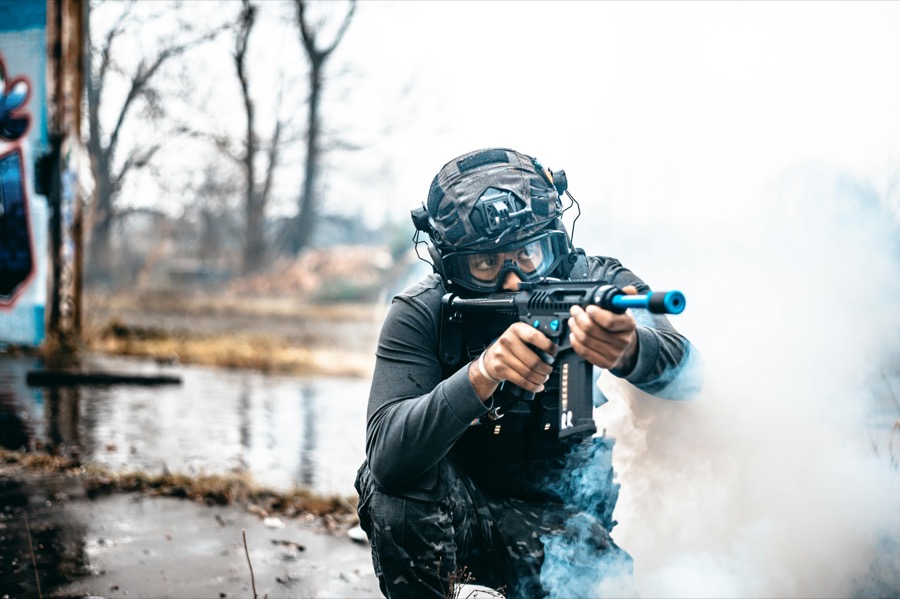
It was my first outdoor MilSim event. Our squad was pinned behind a row of wooden barricades, staring at forty meters of wide-open grassland with zero cover between us and the objective we needed to capture. Three teammates had already been eliminated trying to rush across, and the rest of us were crouching behind cover with nowhere to go. Just as morale was about to crumble, our squad leader pulled two green Enola Gaye smoke grenades from his vest, yanked the wires, and tossed them into the middle of the field. Within seconds, a thick green wall of smoke stood between us and the enemy, completely blocking their line of sight. We sprinted across the open ground before the smoke cleared and took the objective.
That was the moment I truly understood what smoke grenades bring to the table — they are not flashy accessories but genuine tactical tools that can flip the outcome of an engagement. At the same time, I realized most players know surprisingly little about them: which brand to buy, how different models compare, which fields allow them and which do not. This guide answers all of those questions in one place.
How Smoke Grenades Differ from Other Airsoft Grenades
If you have read our complete airsoft grenade guide, you already know that grenades fall into four main types: smoke grenades, sound grenades, BB grenades, and flashbangs. Smoke grenades stand apart because their purpose is not to eliminate opponents but to reshape the battlefield itself.
Sound grenades rely on psychological shock. BB grenades rely on physical elimination. Smoke grenades do something more fundamental — they strip away the most critical combat resource your opponent has: line of sight. In airsoft, if you cannot see a target you cannot shoot, if you cannot shoot you cannot suppress, and if you cannot suppress you cannot stop an advance. A single smoke grenade can transform a locked-down lane into a safe movement corridor and turn exposed open ground into a concealed smoke zone in a matter of seconds. That ability to redefine space is something no other grenade type can match.
That said, smoke grenades come with clear limitations. They are single-use consumables, so long-term costs run significantly higher than refillable gas grenades. And they are almost exclusively an outdoor tool — the vast majority of indoor CQB fields explicitly ban them. If you primarily play indoor CQB, sound grenades and BB grenades will serve you far better.
The Enola Gaye Lineup Explained
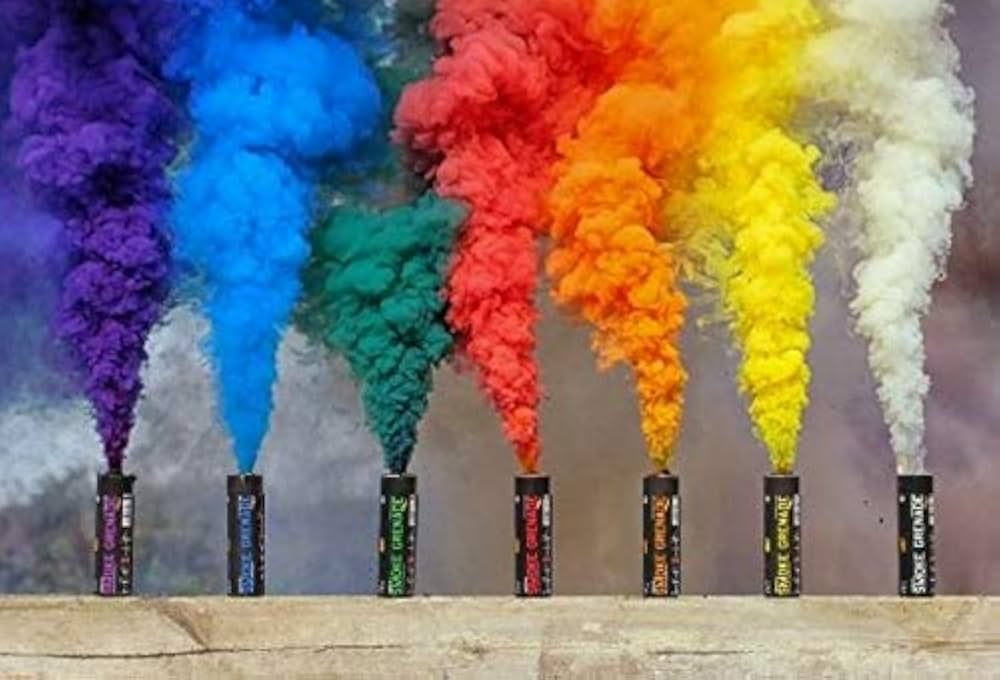
When it comes to airsoft smoke grenades, Enola Gaye is the first name virtually every player thinks of. This UK-based company has been focused on smoke effect products since 2005 and currently holds the largest market share in the airsoft and paintball smoke grenade space. Their product line spans from entry-level to high-end, and the pull-wire ignition design keeps the learning curve nearly flat.
The EG25 sits at the base of the lineup at roughly $8 to $12 per unit. It is compact, lightweight, and produces about 25 seconds of smoke. That may not sound like much, but in an actual game it is more than enough to cover a quick dash across open ground. Because of its small size, you can clip three or four onto a tactical vest and grab one whenever you need it. For players trying smoke grenades for the first time, the EG25 is the lowest-risk entry point — even if you decide smoke is not your thing, you are only out about ten dollars.
The WP40 series steps things up, priced around $14 to $16 per unit. Burn time extends to approximately 60 seconds with noticeably denser smoke output. If you need more than a quick crossing screen — say, sustained cover for an entire squad moving through an open area one by one — the WP40’s 60-second burn time becomes genuinely valuable. The pull-wire mechanism is identical to the EG25, just in a slightly larger canister.
The EG18X is Enola Gaye’s flagship and one of the most popular large-format smoke grenades on the market, running about $18 to $20 each. Unlike the sustained-output models above, the EG18X takes a burst approach, releasing a massive volume of high-density smoke over 50 seconds that instantly blankets a large area. For marking positions or creating wide smoke corridors during MilSim events, the EG18X is hard to replace. On Reddit’s airsoft communities, the EG18X is recommended far more frequently than any other model, with grey and white being the go-to colors for maximum concealment in wooded environments.
The Twin Vent series offers a different design philosophy. Dual exhaust ports push smoke from both ends simultaneously, building a screen faster than single-vent models. Priced around $16 to $18, it sits between the WP40 and EG18X in terms of both cost and output.
Five Battlefield Smoke Tactics
Knowing the products is only step one. What matters more is knowing when and how to deploy them. The tactical value of a smoke grenade depends entirely on timing and placement.
Crossing Cover — The Most Basic and Most Useful Move
This is the most intuitive use of smoke. When your squad needs to cross an open stretch with no hard cover, toss one or two smoke grenades along your movement path and start moving once the smoke builds. The key is not to wait until the smoke is at full density — the first 20 to 30 seconds of peak output is your golden window. The EG25 works well for individual dashes, while the WP40 or EG18X is better suited for squad-level movement.
One frequently overlooked detail is wind direction. If the wind blows from your position toward the enemy, smoke will drift away from your path and your concealment evaporates. Observe the wind first, then throw the grenade on the downwind side of your route so the smoke drifts across your path rather than away from it.
Smoke Flanking — An Advanced Team Tactic
If you have read our team tactics guide, you know that flanking requires coordination between a suppression element and a maneuvering element. Smoke grenades can play a pivotal role here: the suppression team pops smoke on the front line to draw attention, while the flanking team uses the enemy’s obscured vision to quietly push to an advantageous position on the side. This is more effective than fire suppression alone because smoke does not just pin the enemy — it completely cuts off their ability to observe the flank.
Smoke Withdrawal — Losing the Fight but Saving the Team
Not every engagement goes your way. When your squad is outgunned and staying put means getting picked off one by one, toss a smoke grenade between your position and the enemy and pull everyone back to a more defensible spot. Retreating is not a sign of weakness — preserving your force and redeploying beats getting wiped out in an unfavorable position. Many experienced players keep at least one smoke grenade on their vest specifically as a lifeline for emergency disengagement.
MilSim Signal Marking — Color Is Language
In large-scale MilSim events, smoke grenades evolve from tactical tools into communication devices. Different colors carry different meanings, mirroring real military smoke signaling. The most common color conventions are red for marking enemy positions, green for marking friendly positions or safe rally points, and purple for requesting medical support. However, color assignments vary between events, so always confirm the organizer’s SOP (Standard Operating Procedure) during the pre-game briefing.
Enola Gaye offers up to nine color options, which is a major reason they dominate the MilSim scene. When organizing your team, buy two or three agreed-upon colors in advance and assign meanings before the event. This way critical information can be relayed across the field without radio communication.
Psychological Pressure — Smoke Creates More Stress Than You Think
This is something many newer players overlook. When your opponents suddenly see a cloud of smoke rolling toward their position, their instinctive reaction is usually not “it is just smoke” but rather “someone is about to push through.” That psychological pressure forces them to concentrate on the smoke zone, pulling their attention away from other directions. Even if you have no intention of attacking through the smoke, just popping one grenade can shift the enemy’s defensive focus. In large-scale games with multiple players per side, this attention manipulation is especially powerful.
Field Rules and Safety Guidelines
The tactical advantages smoke grenades offer come with stricter safety requirements than other grenade types. If you plan to start using smoke, these rules need to be crystal clear before game day.
Nearly all indoor fields prohibit smoke grenades, with no exceptions. Smoke in an enclosed space can trigger fire suppression systems and alarms, the chemical particulates can cause respiratory discomfort in poorly ventilated areas, and near-zero visibility indoors is a safety hazard for everyone on the field. Some fields even restrict smoke grenades to designated outdoor zones, so always confirm with the field operator before bringing them out.
When using smoke grenades outdoors, fire risk is the number one concern. The canister generates significant heat during the burn, and landing on dry leaves or dead grass can start a fire. During dry seasons or after extended periods without rain, many fields temporarily ban smoke grenades altogether. Always aim for dirt, gravel, or damp ground when throwing, and stay well clear of dry vegetation.
Never throw smoke grenades directly at someone’s head. The metal canister has real weight and can cause bruising at close range. The correct approach is to throw toward the ground and let the smoke deploy from where it lands. Spent canisters must be collected and removed from the field — do not leave them behind as litter and trip hazards.
It is also worth mentioning the regulatory landscape. In the United States, the ATF reviewed the shipping and sale of smoke grenades in 2023. While products from major brands like Enola Gaye remain legal to purchase in most states, some states impose additional restrictions. Check your local regulations before buying, especially regarding shipping requirements.
Budget Guide: From First-Timer to MilSim Heavy User
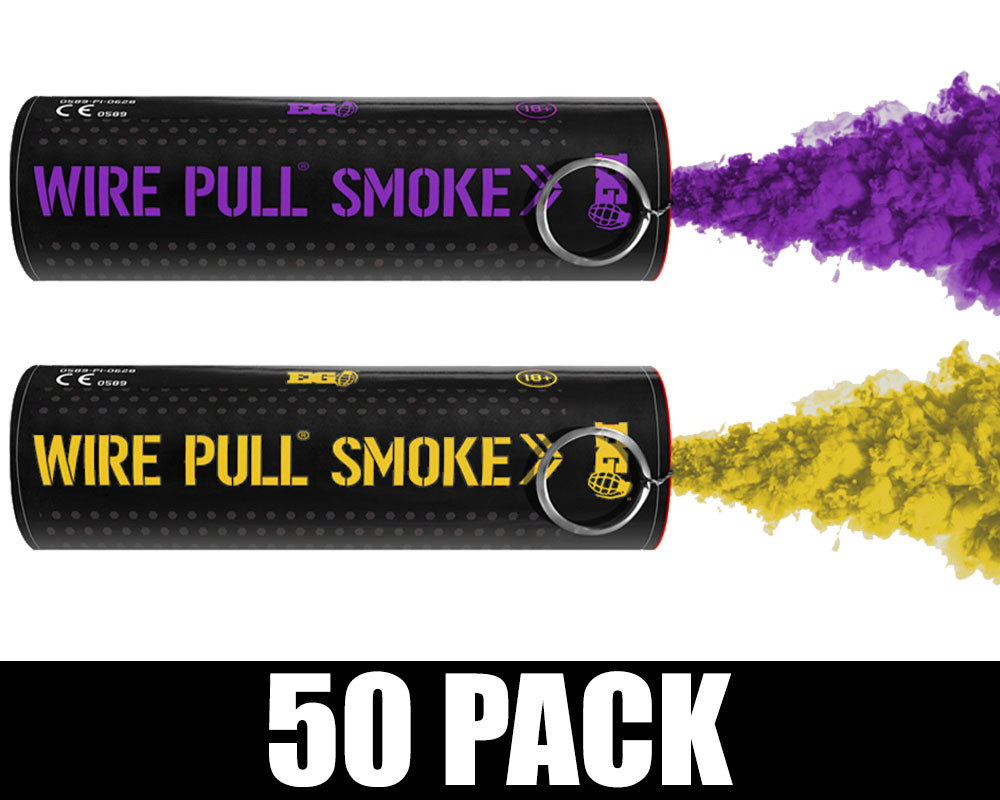
Budgeting for smoke grenades works differently from budgeting for a new gun. Because smoke grenades are single-use consumables, you need to think not just about per-unit cost but about per-game-day spending.
If you simply want to try smoke grenades and see what the fuss is about, pick up two or three EG25 units for a total of roughly $25 to $35. Bring them to an outdoor game, pop one at the right moment, and experience the smoke spread and duration firsthand. At this stage you do not need to overthink tactics — just enjoy the experience.
Once you start using smoke seriously in gameplay, carrying two to four grenades per game day is a reasonable amount. A solid combination might be two EG25s plus one WP40, or two WP40s, putting your per-game spend around $30 to $50. Treat your smoke grenade budget as a recurring consumable like BBs and allocate a fixed monthly amount.
MilSim events are an entirely different consumption level. Over a two-day event, a squad that actively uses smoke might need five to eight grenades per player. This is where the EG18X’s massive smoke output earns its price tag, paired with a few WP40s in different colors for signaling. Your smoke grenade bill for a single event could reach $80 to $150, but the impact on the overall experience is enormous. Many MilSim teams purchase in bulk to secure volume discounts — if you have a regular squad, coordinating a group buy is the way to go.
For budget-conscious players, here is a pragmatic strategy: do not bring smoke grenades to every game. Save them for the events that matter — MilSim weekends, team practice matches, or big scenario games. Use sound grenades or BB grenades for regular skirmish days and concentrate your smoke budget where it will have the greatest impact.
Frequently Asked Questions
Can I use smoke grenades at indoor CQB fields?
Almost every indoor field explicitly prohibits smoke grenades. Smoke in an enclosed space triggers fire alarm systems, and the chemical particulates can cause respiratory discomfort in areas with poor ventilation. If you want a similar tactical effect in CQB, sound grenades like the Thunder B are a safer and widely accepted alternative.
What is the real difference between the Enola Gaye EG25 and EG18X?
The biggest differences are smoke volume and duration. The EG25 is the entry-level model with 25 seconds of smoke, ideal for quick individual crossing cover, compact enough to carry several, and priced at about $8 to $12 each. The EG18X is the flagship with 50 seconds of massive, high-density burst smoke that instantly covers a large area, suited for squad movement and MilSim signaling, at about $18 to $20 each. If you are buying for the first time, start with the EG25 to get a feel for smoke before investing in the EG18X.
Can smoke grenades start a fire?
Yes, and this is exactly why many fields ban them during dry seasons. The canister heats up during the burn, and if it lands on dry leaves or dead grass it can ignite them. Always throw onto dirt, gravel, or damp ground. If your field allows smoke but conditions are dry, carrying a small bottle of water as a precaution is a smart habit.
What do smoke grenade colors mean in MilSim events?
Color meanings vary by event, but the most common conventions are: red marks enemy positions, green marks friendly positions or safe rally points, and purple signals a medical request. White and grey are generally used purely for concealment. Each MilSim event publishes its own color SOP before game day, so always confirm during the briefing. Enola Gaye offers nine colors, covering virtually any signaling scheme.
Is it legal to buy smoke grenades?
In most US states, consumer-grade smoke grenades from established brands like Enola Gaye are legal to purchase. However, some states have restrictions, and the ATF has reviewed shipping regulations for these products. Always check your local and state laws before ordering, and be aware that some retailers charge hazmat shipping fees due to the pyrotechnic nature of the product.
Final Thoughts: Smoke Grenades Are an Extension of Tactical Thinking
A smoke grenade will not make your shots more accurate the way a better barrel will, and it will not reduce the sting of getting hit like good protective gear does. What it does is subtler — it gives you an option on the battlefield that others do not have. When everyone is stuck behind cover afraid to move, you can pop smoke and create an opening. When your teammates need to fall back, you can throw a screen and buy them a few precious seconds.
If you already have a solid understanding of airsoft grenade types and you regularly play at outdoor fields, a smoke grenade is the most worthwhile next addition to your tactical kit. Start with a few EG25s, find your rhythm, then scale up — you will discover that the moment smoke rolls across the field, the game becomes a whole new experience.
Want to sharpen your tactical edge even further? Pair smoke deployment with Airsoft Shot Timer App training to ensure your draw and reload speeds are faster than your opponent’s reaction when the smoke clears.
Related Articles
- Airsoft Grenade Complete Guide — Full comparison of all four grenade types
- 15 Airsoft Tactics to Win Team Games — Smoke screens combined with flanking maneuvers
- CQB Close Quarters Battle Guide — Indoor tactics and room clearing techniques
- Airsoft Loadout Complete Guide — Full gear setup including smoke grenades
- Tactical Vest & Plate Carrier Guide — MOLLE system for mounting smoke pouches
- Airsoft Smoke Grenade
- Smoke Grenade
- Enola Gaye
- EG18X
- WP40
- EG25
- MilSim
- Airsoft Gear
- Tactical Gear
- Airsoft Tactics
- Airsoft
- Best Smoke Grenade
- Airsoft Smoke Bombs