Airsoft Chest Rig Guide: Micro vs Full-Size, MOLLE Setup & 5 Best Picks (2026)
Wearing Less Actually Made Me Play Better
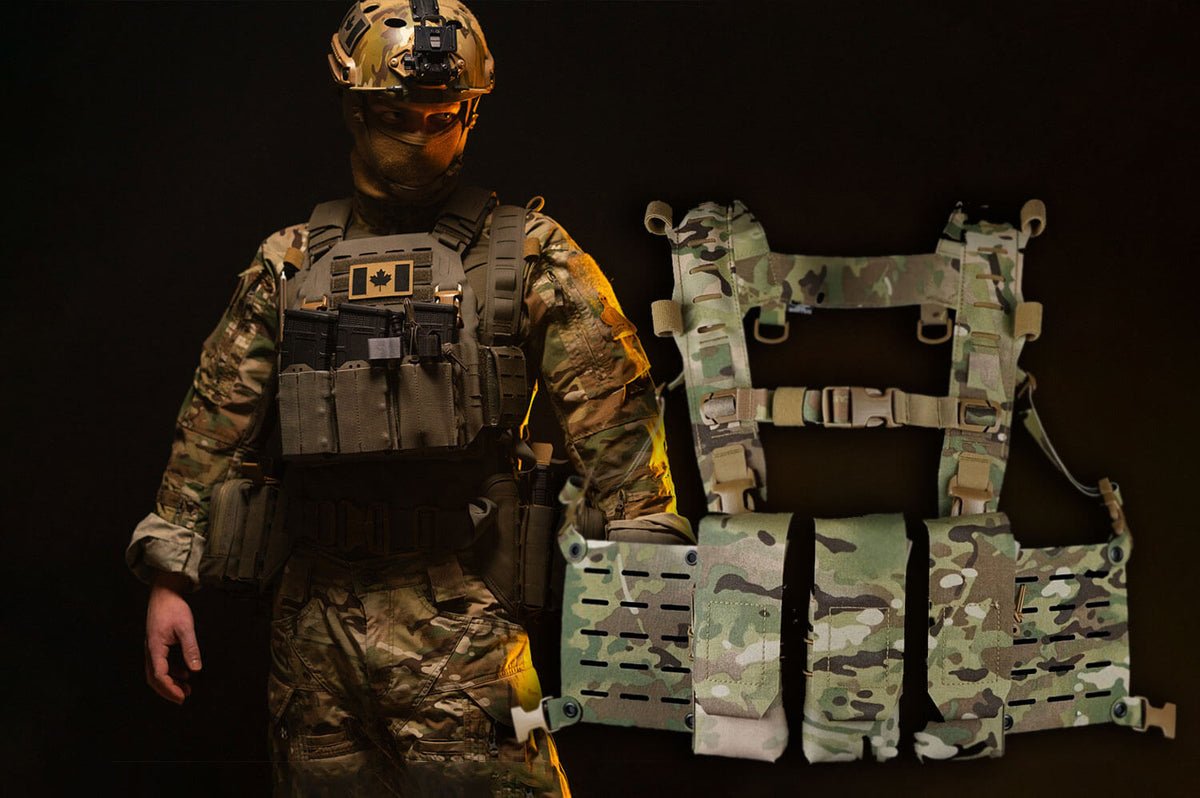
I remember the weekend I first decided to leave my plate carrier at home. I’d been playing airsoft for about six months, always wearing a JPC replica loaded with triple mag pouches on the front, a radio pouch and canteen on the side, and a utility pack on the back. It looked great in photos, but after two or three hours my shoulders were killing me, and every time I tried to duck behind a low barrier the gear on my chest got in the way. Then a teammate handed me his chest rig to try. I loaded three rifle magazines, pulled the shoulder straps tight, buckled the waist strap, and stood up. My first thought was — “That’s it?”
I ran faster that day. I crouched lower. Magazine changes were smoother. I played four consecutive rounds without feeling exhausted. My plate carrier has barely left the gear bag since.
Chest rigs aren’t new, but they’ve exploded in popularity within the airsoft community over the past few years, especially the micro chest rig category which has become almost a trend of its own. Whether you’re a beginner looking for your first load-bearing gear or an experienced player wanting to shed weight from your plate carrier setup, this guide will help you understand all the options and find the right chest rig for your playstyle.
What Is a Chest Rig? And How Is It Different from a Plate Carrier?
A chest rig is a lightweight load-bearing system that sits on your front torso, held in place by shoulder straps and a waist strap. Your back stays completely open — nothing pressing against your spine or trapping heat.
Plate carriers were originally designed to hold ballistic armor plates, with full coverage panels front and back. Even when used in airsoft without actual plates, all that extra fabric, padding, and structure still adds weight and heat retention. An empty plate carrier typically weighs 1.5 to 2 kilograms, and once you attach pouches it can easily exceed 3 kg. A chest rig, by comparison, usually weighs between 300 and 600 grams empty, and stays under 1 kg even with three loaded magazines.
That weight difference might not feel significant during your first round, but by the third or fourth game your shoulders and lower back will tell you exactly how much it matters. And because the back is completely open, chest rigs breathe far better than plate carriers — in hot summer conditions, this alone can be a game changer.
The trade-off is carrying capacity. If you’re attending a MilSim event and need to carry a hydration bladder, radio, IFAK, and a dozen magazines, a chest rig alone won’t cut it. But for typical weekend skirmishes, three to four rifle magazines plus a small utility pouch is more than enough. For a deeper look at plate carriers, check out our tactical vest and plate carrier guide.
Three Types of Chest Rigs: Which One Fits You?
Full-Size Chest Rigs
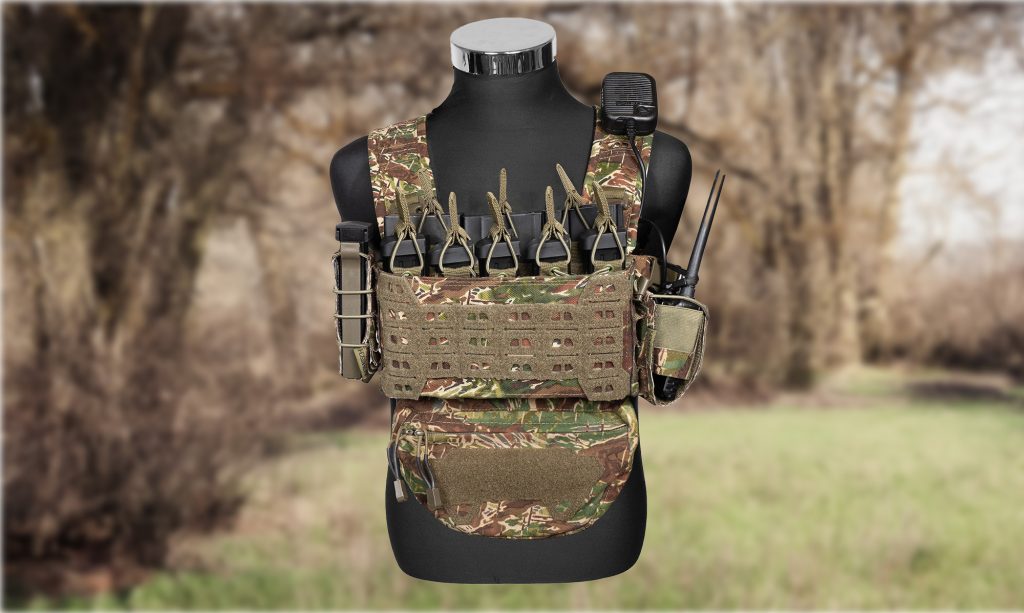
The full-size chest rig is the most traditional design. The front panel has enough real estate for four to six rifle magazines, and side panels usually include additional pockets for radios, smoke grenades, or water bottles. The Condor MCR5 Recon and Condor MCR6 Rapid Assault are classic examples of this category — affordable ($35-55), and they come with built-in magazine pouches so you can use them right out of the box.
Full-size chest rigs work well for players who need to carry more gear but don’t want the bulk of a plate carrier. MilSim-lite events, large outdoor fields, or situations where your gun chews through ammo quickly (like running full-auto AEGs) and you need extra backup magazines are ideal scenarios. The downside is that full-size rigs are noticeably bulkier than micro options, which can feel cumbersome in tight CQB environments.
Micro Chest Rigs
The micro chest rig is the hottest category in tactical gear right now. The concept is simple: carry only what you actually need — typically three rifle magazines and a small utility pouch. The entire front panel might be no bigger than a sheet of letter paper, weighing between 200 and 400 grams. When you’re wearing one, you barely know it’s there.
The Haley Strategic D3CRM and Spiritus Systems Micro Fight are the two benchmarks in this space. The D3CRM is widely regarded as having the best magazine retention system in the industry — its MP2 inserts provide just the right amount of resistance for smooth draws and easy reindexing, no break-in period needed. It runs about $130-160. The Spiritus Micro Fight takes the extreme modularity route, letting you swap different inserts for AR-15, AK-47, or pistol magazines. It costs around $80-120 for the chassis alone (harness sold separately).
If your budget is tight, there are plenty of affordable Micro Fight clones ($25-50) on the market that cover the basic “three mags plus a pouch” requirement. The fit and finish won’t match the originals, but for getting started and figuring out whether you like the micro rig lifestyle, they’re a perfectly reasonable entry point.
Placards
A placard isn’t technically a standalone chest rig — it’s a modular front panel that attaches to a plate carrier via Swift Clips or hook-and-loop. But since many placards come with optional shoulder straps for standalone use, they deserve mention here.
The biggest advantage of placards is versatility. You can clip them onto a plate carrier for full MilSim loadouts, then detach and run them with a harness as a lightweight chest rig for CQB. Both the Haley Strategic D3CRM and Spiritus Micro Fight support this dual-use approach, which is a big reason they’re so popular in the community.
MOLLE Weaving Tutorial: The Key to Keeping Your Gear Secure
MOLLE (Modular Lightweight Load-carrying Equipment) is the backbone of modern tactical gear modularity. Those rows of nylon webbing you see on chest rigs and plate carriers are called PALS (Pouch Attachment Ladder System) — and your pouches attach by weaving through them.
A common beginner mistake is threading the attachment straps straight through the base webbing from top to bottom, which leaves the pouch dangling loosely. The correct method is an alternating weave: thread the strap through the base webbing, then back through the pouch’s own webbing, then through the next row of base webbing, then back through the pouch again. This back-and-forth interlocking pattern — like fingers clasped together — creates a tight, rattle-free fit. Finish by snapping the retention button at the bottom, and the pouch will sit flush against your rig through all the running and diving you can throw at it.
Weaving a single pouch takes about one to two minutes, maybe longer your first time. But that time investment pays for itself — having a mag pouch come loose and fall on the ground mid-firefight is far worse than spending an extra two minutes during setup.
5 Recommended Chest Rigs: Entry-Level to High-End
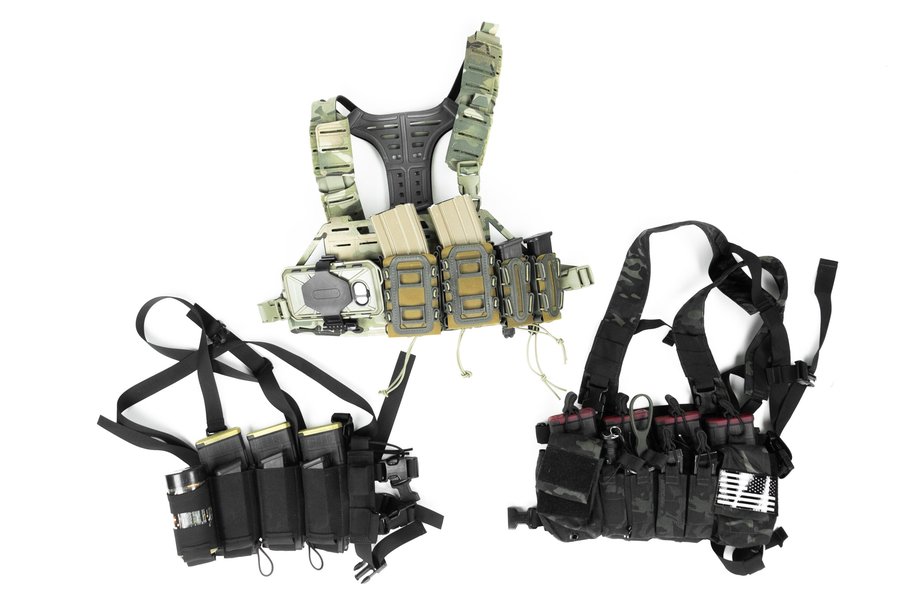
You don’t need to buy the most expensive option right away. Here are five picks spanning the full budget range from $25 to $180.
The first option is any of the affordable Micro Fight clones from brands like WYNEX and vAv YAKEDA, priced around $25-40. Search “tactical chest rig” on Amazon and you’ll find dozens. They typically use 500D to 600D nylon, include three rifle magazine slots plus a utility pouch, and feature adjustable straps. The build quality is noticeably below premium brands — expect loose threads, weaker Velcro, and inconsistent mag retention. But as a starter rig, they let you experience the chest rig lifestyle for minimal investment before committing to an upgrade.
The second pick is the Condor MCR5 Recon Chest Rig at about $40-55. Condor’s reputation in the airsoft community is built on value, and the MCR5 is their most iconic full-size chest rig. It holds six M4 magazines plus six pistol magazines, with four rows of MOLLE webbing on each side for further expansion. The shoulder straps have mesh padding for decent breathability, and it comes in multiple colorways with Multicam being the most popular. If you need high carrying capacity at a reasonable price, the MCR5 is hard to beat.
The third recommendation is the Spiritus Systems Micro Fight Mk4 Chassis at $80-100 (front panel only, harness sold separately). Spiritus practically created the micro chest rig category, and the Mk4 is their latest iteration. Its defining feature is extreme modularity — you can choose different magazine inserts for AR-15, AK-47, or pistol mags, or remove everything to use it as a general-purpose pouch. Note that you’ll need to purchase straps separately (their Fat Straps or a third-party harness), bringing the total to roughly $120-150 for a complete setup.
Fourth is the Haley Strategic D3CRM Micro Chest Rig at approximately $150-180. The D3CRM is constantly compared to the Spiritus, and where it wins is the magazine retention system. Its MP2 inserts deliver perfect resistance right out of the box — no break-in needed like Kydex — making both draws and reindexing feel effortless. Another advantage is that the D3CRM ships with a harness included, so you’re not buying parts separately. If you want a “ready to go out of the box” experience, the D3CRM is the least fuss.
The fifth option is a Crye Precision AirLite SPC with a placard system, starting at $180 and up. This enters “real-steel grade” territory with top-tier materials, construction, and ergonomics. It’s overkill for most airsoft players’ budgets, but if you also shoot real firearms or train with them, a Crye setup can pull double duty between airsoft and live-fire training.
Setting Up Your Chest Rig by Playstyle
Buying the chest rig is only step one. How you configure it makes all the difference in actual gameplay.
CQB Indoor Fields: Minimalism Wins
CQB games are fast-paced, close-range, and short. You need far less gear than you think. A micro chest rig loaded with three mid-cap magazines is enough to last an entire round. Some seasoned CQB players run only two mags in their rig, keeping a third in a pants pocket as a last resort.
In CQB environments, the thinner your front profile the better — a bulky rig will catch on door frames and slow you down in narrow corridors. Micro chest rigs shine here. You can crouch behind low walls, slip through doorways, and even crawl without anything getting in the way.
MilSim Outdoor Fields: The Chest Rig + Battle Belt Combo
If you want to play MilSim without a plate carrier, the chest rig plus battle belt combination is the community’s favorite alternative. Rifle magazines go on the chest rig for quick access, while your pistol, pistol mags, dump pouch, and other tools ride on the battle belt. This combo weighs roughly half of a full plate carrier setup but carries nearly the same amount of gear.
Full-size chest rigs are more appropriate here since you may need four to six magazines plus mounting space for smoke grenades or a radio. A Condor MCR5 paired with a $40 MOLLE battle belt gives you a highly functional MilSim-lite loadout for under $100 total. For more loadout inspiration, check out our airsoft loadout guide.
Snipers: Low Profile, Lightweight, Stay Prone
Snipers have a unique requirement: when you’re lying prone and aiming, nothing thick should be between your chest and the ground. A bulky plate carrier lifts your body higher, making your silhouette more visible above cover. A micro chest rig’s ultra-thin front panel solves this perfectly — you barely feel it when you go prone.
Snipers typically only need two to three spare magazines since bolt-action rifles fire slowly, so a micro chest rig’s capacity is more than sufficient. Use the remaining space for a rangefinder, wind indicator, or compact observation scope and you’ve got a complete sniper loadout. For more sniper gear advice, see our airsoft sniper rifle guide.
Common Chest Rig Buying Mistakes
There are a few pitfalls worth highlighting as you shop for and set up your chest rig.
The most common mistake is filling every MOLLE slot with pouches. The whole point of a chest rig is staying lightweight. If you hang six pouches off it, the weight approaches plate carrier territory but without the structural support to distribute it properly, meaning the shoulder straps dig in harder and comfort actually gets worse. Follow this rule: only carry what you know you’ll use in a single game.
The second mistake is ignoring the waist strap. Many cheap chest rigs rely solely on shoulder straps for support, which means the entire panel bounces up and down when you run. A proper waist strap anchors the rig to your torso and dramatically reduces movement. If your rig’s included waist strap is too thin or loose, spending $10-15 on a thicker replacement strap will significantly improve your experience.
The third mistake is not checking magazine compatibility. Different brands of AEG magazines vary slightly in width, and AK magazines are noticeably wider than M4 mags. Before buying a chest rig, confirm that its magazine pouches fit your specific magazines. If you run both M4 and AK platforms, a system like the Spiritus Micro Fight with swappable inserts is especially valuable.
Frequently Asked Questions
Can you wear a chest rig over a plate carrier?
Yes, many players run a chest rig over their plate carrier. The plate carrier provides structure and additional mounting space while the chest rig gives you quick-access magazine placement on top. This combo is mostly seen among heavy MilSim players — for regular skirmishes, choosing one or the other is sufficient.
Should a beginner buy a chest rig or a plate carrier first?
If you’re unsure about your preferred playstyle, start with a chest rig. It’s cheaper, lighter, and works across more scenarios. Spend $30-50 on an entry-level rig and use it for a few games. Once you’ve figured out your style, you can decide whether to upgrade to a premium micro rig or switch to a plate carrier.
Are three magazines in a micro chest rig enough?
For most situations, yes. Three mid-cap magazines (120-150 rounds each) plus the one in your gun gives you roughly 500-600 rounds total, which is plenty for a complete round. If you need more, carry a spare or two in your pants pockets, or pair the rig with a battle belt for extra capacity.
What brands make the best MOLLE pouches?
For budget options, Condor and 8Fields offer solid value. Mid-range picks include Warrior Assault Systems and Emerson. At the high end, Esstac KYWI magazine pouches are considered the gold standard, alongside Haley Strategic and Spiritus Systems accessories. Pouches don’t need to match your chest rig’s brand — any standard MOLLE-compatible pouch will work.
How can I use a shot timer to practice magazine changes from a chest rig?
Using an Airsoft Shot Timer for timed reload drills is the most effective way to build speed. Set a par time of 3 seconds and practice the full sequence: draw a magazine from the chest rig, insert it into the gun, and release the bolt catch. Once you can consistently hit 2.5 seconds, shorten the par time to 2 seconds. Chest rigs position magazines closer to where your hands naturally hang, so reloads from a chest rig are typically faster than from a plate carrier.
Bottom Line: Buy What You Need, Not What Looks Cool
The essence of a chest rig is “less is more.” It can’t hold everything a plate carrier can, but it gives you faster movement, better airflow, and longer-lasting comfort. For most weekend skirmish players, a solid chest rig with three or four magazines is all you really need.
If you’re on the fence about trying a chest rig, here’s my advice: grab a $30-40 entry-level rig and bring it to a couple of games. If you’re anything like me, the moment you feel that sense of freedom — the lightness, the speed, the unrestricted breathing — your plate carrier will end up collecting dust in the bottom of your gear bag.
Related Reading: Tactical Vest & Plate Carrier Guide | Airsoft Loadout Guide | CQB Tactics Guide | Shot Timer App Guide
- Airsoft
- Chest Rig
- Tactical Chest Rig
- Airsoft Chest Rig
- MOLLE
- Micro Chest Rig
- Haley Strategic D3CRM
- Spiritus Systems
- Condor Chest Rig
- Airsoft Loadout
- Airsoft Gear
- Plate Carrier
- Battle Belt
- CQB
- MilSim
- Speedsoft
- Best Airsoft Chest Rig
- Chest Rig Setup