Airsoft BB Weight Guide: 0.20g to 0.43g by FPS & Range
Contents
Airsoft BB weight is the mass of each 6 mm plastic BB, and it’s the cheapest upgrade most players never try. The short answer: if your gun shoots about 350 fps on 0.20 g BBs, use 0.25-0.28 g. At 400 fps, use 0.28-0.32 g. DMRs and snipers should start at 0.36 g and go up. Those ranges come from matching weight to muzzle energy, and the physics below explains why heavier usually wins. A heavier BB leaves the barrel slower, but it keeps its speed better. Past about 25-30 metres it gets to the target first, drifts less in the wind and hits with more energy.
Most of us learn the opposite. You buy your first gun, the shop hands you a bag of 0.20 g BBs, and someone at the safe zone tells you light BBs are “faster, so the other guy has less time to dodge.” That’s only true up close, and the difference there is a few thousandths of a second. This guide puts real numbers on that claim. Then it covers what changes with gun type, where hop-up spoils the plan, and how to test your own gun in an afternoon.
Quick answer — BB weight by power
- Around 1.0 J (330 fps on 0.20 g; pistols, low-power CQB guns): 0.20-0.25 g
- 1.0-1.2 J (350 fps class, typical indoor limit): 0.25-0.28 g
- 1.2-1.5 J (400 fps class, typical outdoor AEG): 0.28-0.32 g
- 1.5-2.0 J (DMRs): 0.32-0.40 g
- 2.0 J and up (bolt-action snipers): 0.40-0.48 g
What BB Weight Should You Use? Match It to Your Joules
Use the heaviest BB your hop-up can still lift flat at your gun’s muzzle energy. In practice that’s the chart above. If you’re between two weights, take the heavier one for outdoor games and the lighter one for CQB. The chart is measured in joules, not fps, because fps changes every time you change weight, while energy stays roughly the same. If your field quotes a limit like “400 fps on 0.20 g,” that’s 1.49 J. The airsoft joule calculator converts any reading in a couple of seconds.
The published charts don’t agree, and it’s worth knowing why. Retailer guides like Airsoftmaster’s put 0.25-0.28 g as “a good balance for most rifles” and only move to 0.28-0.32 g for DMRs. Novritsch’s 2021 chart puts 0.28 g at 1.0-1.5 J, 0.32 g at 1.2-1.5 J and 0.36 g at 1.5-2.0 J. The heavy-BB school goes further. Phoenix Feather Airsoft’s 2024 ballistics video recommends 0.32 g at just 1 J and 0.36-0.40 g at 1.49 J. Our chart sits in the middle, because the heaviest weight that works depends on your hop-up and barrel, and most stock guns can’t lift the top of that range.
If you remember one thing, make it this. On the same gun, going one step heavier almost never makes it worse at range. At worst the trajectory is about the same. Going two or three steps heavier is where you need an upgraded hop-up, and where most “heavy BBs ruined my gun” stories start.
Why Heavier BBs Win Past 30 Metres
A light BB starts faster and slows down faster. Air drag depends on the BB’s size and speed, and every 6 mm BB is the same size. So a 0.20 g BB feels the same drag force as a 0.32 g BB at the same speed, but it has less mass to resist it. It loses speed far more quickly. At any given speed, a 0.20 g BB slows 1.8 times as fast as a 0.36 g BB. By 40 metres the light BB has lost about 80% of its speed, and the heavy one has lost about 60%.
We modelled each weight at 1.49 J, the classic 400 fps outdoor limit, using standard sphere drag with no hop-up. As a check, the same model reproduces the figures from the Airsoft Trajectory Project (a 2012 ballistics study that most BB charts trace back to) to within 0.02 seconds. For example, it gives 1.67 s against the study’s 1.65 s for a 0.20 g BB to reach 53 m at 1.14 J, and 1.99 s against 2.0 s to reach 60 m at 1.49 J.
| BB weight (1.49 J) | Muzzle fps | Time to 20 m | Time to 40 m | Speed left at 40 m | Drift at 40 m in a 2 m/s breeze |
|---|---|---|---|---|---|
| 0.20 g | 400 | 0.249 s | 0.794 s | 25 m/s | 93 cm |
| 0.25 g | 358 | 0.255 s | 0.732 s | 31 m/s | 73 cm |
| 0.28 g | 338 | 0.260 s | 0.715 s | 34 m/s | 65 cm |
| 0.32 g | 317 | 0.267 s | 0.704 s | 36 m/s | 58 cm |
| 0.36 g | 298 | 0.275 s | 0.701 s | 38 m/s | 52 cm |
| 0.40 g | 283 | 0.284 s | 0.704 s | 39 m/s | 48 cm |
Read the 20 m column first. The 0.20 g BB wins, by 0.018 seconds over a 0.32 g BB. That’s 18 milliseconds. Human visual reaction time is around 200-300 milliseconds, so nobody on the field can dodge one weight and not the other at that range. At 10 metres the gap shrinks to about 14 ms between 0.20 g and 0.30 g. That’s the whole “light BBs are faster” advantage.
Now read the 40 m column. The order flips, and the 0.20 g BB arrives about 0.09 s later than a 0.32 g. By 60 metres it’s 1.99 seconds against 1.42, which is more than half a second. That’s long enough for someone to see the BB coming and duck. The 0.36 g and 0.40 g rows are almost the same at 40 m, and the 0.40 g is a hair slower. That’s diminishing returns. In Phoenix Feather’s own audio-timed test, 0.43 g BBs reached a 50 m plate later than 0.36 g out of the same rifle, and the creator read that as 0.43 g being too heavy for that gun.
Energy shows the same thing even more starkly. At 40 m, the 0.20 g BB has about 0.06 J left, and the 0.36 g still carries about 0.26 J, roughly four times as much. That’s why heavy BBs punch through leaves and thin brush that would knock a light one off course. It’s also why the person you hit at 40 m actually feels it and calls it.
The Crossover Point Doesn’t Depend on Your Gun
The distance where a heavier BB overtakes a lighter one stays the same whatever your gun’s power. We ran the model at 1.14 J (350 fps), 1.49 J (400 fps) and 2.32 J (500 fps). In all three, 0.25 g passes 0.20 g at about 25 m, 0.30 g at about 27-28 m, 0.36 g at about 29-30 m and 0.43 g at about 32 m. The arithmetic shows why. Muzzle energy scales every flight time by the same factor for every weight, so it can’t change which one wins at a given distance.
This settles a common argument. People say “heavy BBs only make sense for snipers” because snipers have the power. Power decides how far everything flies. But the distance where heavy starts beating light is set by the two weights alone, so a 1.0 J pistol and a 2.3 J bolt-action hit the same crossover.
So the real question isn’t how powerful your gun is. It’s how far away you usually engage people. If most of your kills happen inside 20 metres, as in CQB, a speedsoft field or a dense wood, BB weight barely matters for time to target. Pick on cost and how well your hop lifts it. If you’re shooting across a field at 35-50 metres, heavier is faster, straighter and harder-hitting at once.
Wind: Where the Difference Really Shows
Light BBs get pushed around far more by wind. In the table, a gentle 2 m/s crosswind (about 7 km/h, barely enough to move leaves) moves a 0.20 g BB about 93 cm off line at 40 m. A 0.32 g moves about 58 cm, and a 0.40 g about 48 cm. A metre of drift at 40 m means aiming a full torso width upwind. Half a metre means you can still hold on the edge of the target and hit.
The reason is the same drag effect. Wind drift comes from the time the BB spends slowed down by the air, and the light BB spends more of its flight time slowed. These are no-hop model numbers, and a real BB with backspin behaves a bit differently. Even so, the order of the weights is reliable, and it matches what every outdoor player notices on a gusty day. The light BBs curl and the heavy ones hold their line.
If you play a lot of outdoor games, this is the strongest argument for going heavier. Speed and energy differences only show past 30 m, but you feel wind drift at 25 m. Even the best hop-up tune is wasted if a breeze takes the BB half a torso sideways.
BB Weight by Gun Type: CQB, AEG, GBB, DMR and Sniper
Start from the chart, then adjust for how your gun is used and how your field runs its chrono.
For indoor CQB at around 350 fps, 0.25 g is the usual pick and 0.28 g is fine if your hop handles it. Engagements are short, so you’re choosing for consistency and price, not range. Some indoor fields cap BB weight, often at 0.25 g, so check before you buy a bag. Light 0.20 g BBs aren’t wrong here, just slightly more erratic. Speedsoft players often run little or no hop on purpose so the BB drops behind cover, which is a different game entirely (see the speedsoft guide).
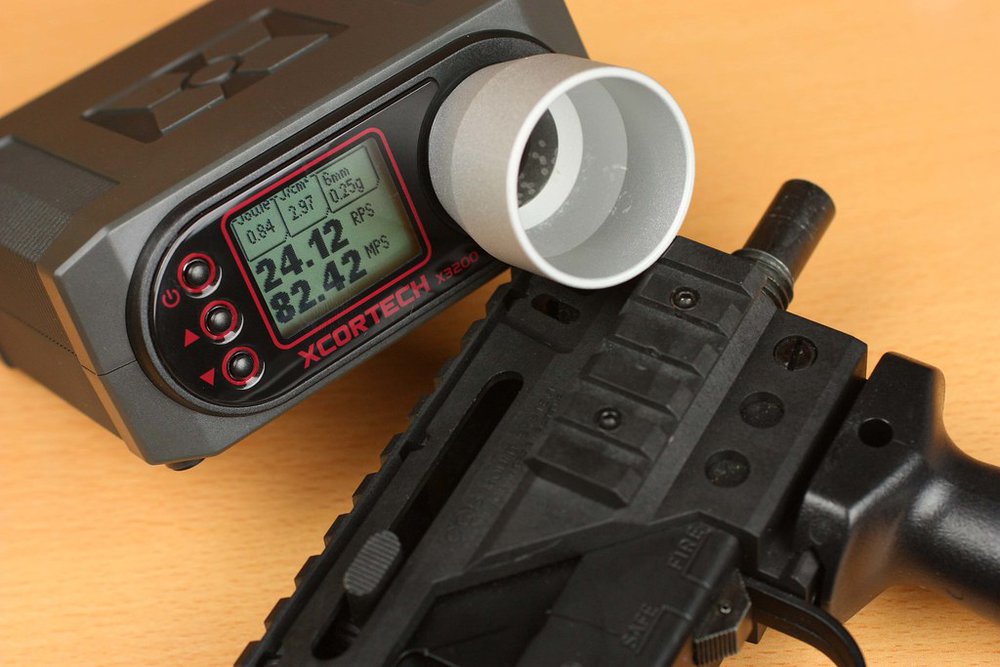
For an outdoor AEG at around 400 fps, 0.28-0.30 g is the sweet spot for a stock hop-up, and 0.32 g if it lifts them flat. Know how your field measures power. If it chronos with 0.20 g BBs, your gun’s fps on heavier BBs will read lower, and that’s expected. AEGs usually lose a little energy with heavier BBs. In Phoenix Feather’s chrono, the same rifle read about 1.46 J on 0.20 g, 1.38 J on 0.36 g and 1.31 J on 0.43 g. Gas and HPA guns can do the opposite and gain energy, which is joule creep. The chronograph and joule creep guide has a three-weight test that tells you which way your gun goes.
For GBB pistols, 0.25 g is the default and many modern pistols are happy on 0.28 g. Pistols run lower energy, usually under 1 J, and short barrels give the hop less time to work. Pistol fights are also mostly close range, where weight barely matters. The practical rule a lot of players use is to run the same BB in the sidearm as in the primary and turn the pistol hop up a little. One bag on the field is one less mistake. If you’re shopping, the best GBB pistol guide notes which models have adjustable hop.
For DMRs at 1.5-2.0 J, 0.32-0.40 g is the normal range. That’s the point of the platform. A DMR earns its minimum engagement distance by reaching out, and that reach comes from the heavy BB as much as from the power. For bolt-action snipers at 2 J and up, 0.40 g is where most start and 0.43-0.48 g is common with an upgraded bucking. The best airsoft DMR guide and sniper rifle guide cover the field rules on power and MED for both.
The Hop-Up Catch: Why a Heavier BB Can Fly Worse
A heavier BB only flies better if your hop-up can spin it enough. At the same muzzle energy, a heavy BB needs much more lift to fly flat. Going from 0.20 g to 0.28 g roughly doubles the lift the hop has to make. A stock bucking at full hop might still be too weak for 0.36 g. The BB then drops early, and you conclude heavy BBs are worse. They’re not. Your hop is out of range.
So change weight and retune together. Every time you change weight, start the hop from zero and add it until the BB just starts to rise at the end of its flight, then back off a touch. If you hit full hop and the BB still drops, you’ve found your gun’s ceiling, so go back one weight step. The hop-up guide explains the arithmetic and how to pick a firmer bucking if you want to go heavier.
The opposite mistake happens too. Players move to heavy BBs, keep the old hop setting, and the BB now arcs into the ground at 25 m. Or they move back to light BBs on a heavy-BB setting and the BB balloons upward. Both look like “this BB weight is bad.” Both are really “this hop setting was tuned for a different BB.”
BB Quality Matters More Than a Few Hundredths of a Gram
A cheap 0.28 g BB can shoot worse than a good 0.25 g. Size, roundness and finish all affect how a BB takes spin, and spin is everything in airsoft. Good BBs are polished, consistent in diameter (5.95 mm, held to about ±0.01 mm on quality brands) and free of seams. Cheap kit BBs, especially the very light 0.12 g ones bundled with toy guns, are often not perfectly round and may have a moulding seam. They can jam tight-bore barrels and curve unpredictably.
Biodegradable BBs are required at many outdoor fields, so check the rules before buying. Good bio BBs shoot nearly as well as non-bio today, but they’re a little more brittle and absorb moisture. Keep them sealed and dry, and don’t leave a loaded magazine in a hot car for a month. Tracer BBs for night games work with weight in exactly the same way as standard BBs.
Last, don’t mix brands or weights in one magazine, and test any new bag before game day. Even two batches of the same brand can differ slightly, and your hop is tuned to the BB that’s in the gun.
Test Your Own Gun: A 30-Minute BB Weight Test With a Shot Timer
The chart and the physics give you a starting point. Your gun, hop-up and barrel decide the answer. Buy small bags of two or three weights, such as 0.25, 0.28 and 0.32 g for an outdoor AEG, and spend one session on them. Use one brand, chrono each weight, and keep the gun the same between runs.
- Set a torso-sized target at your typical engagement distance, ideally 30-40 m, on a calm day.
- For each weight, retune the hop from zero until the BB flies flat to the target, as described above.
- Fire 10 single shots per weight on a timed string. A shot timer app with a par time of, say, 8 seconds keeps the pace honest, so you’re not taking a minute per shot and flattering the result.
- Count hits and note the group size. The weight that gets the most hits wins, even if another one looked prettier in flight.
- Repeat once in a cross breeze if you can. That’s where the weights separate most.
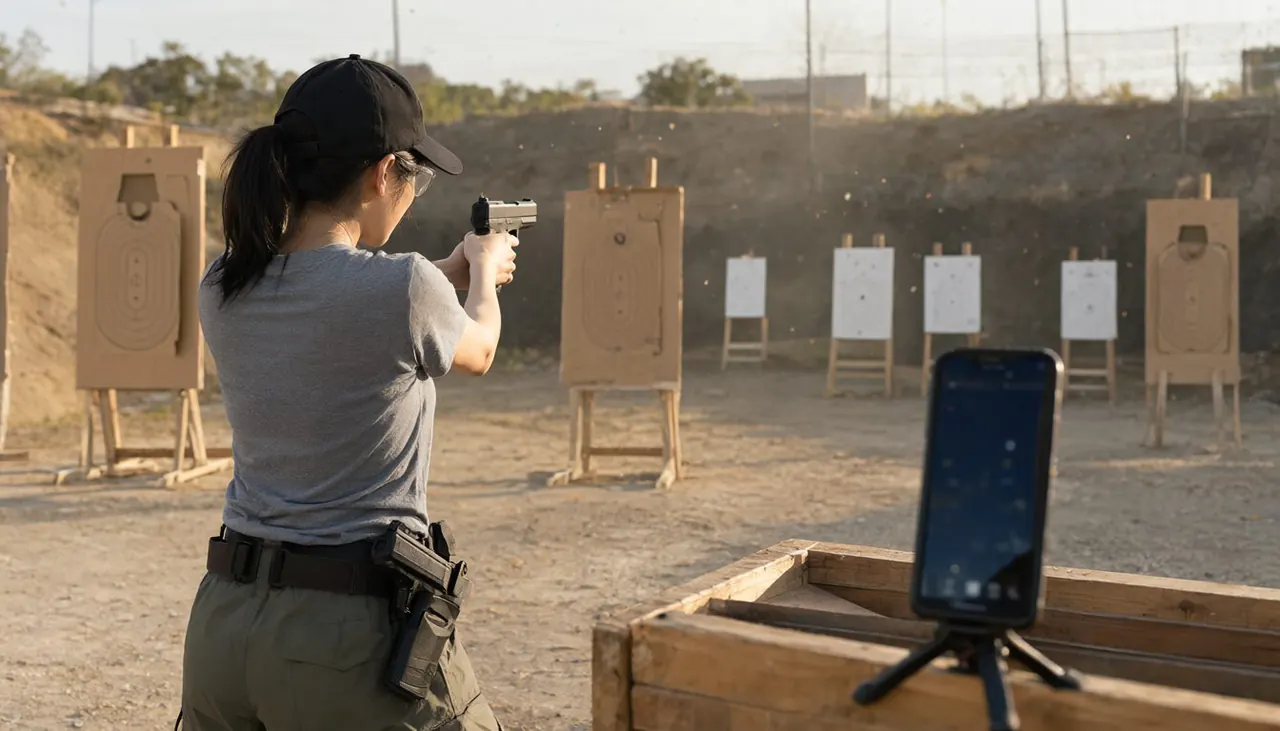
A phone shot timer is handy here because it keeps every string the same length and saves your times without a notebook. The Airsoft Shot Timer app is built to hear airsoft guns, and you can save each weight as its own drill to compare later. If you shoot steel, try one more thing. Some phones will also hear the plate ring as a second “shot,” and the gap between the two is the BB’s flight time plus the sound coming back (about 0.09 s from 30 m). Our app ignores anything within 0.1 s of the previous detection and is tuned for gunshots, not steel, so treat this as a bonus measurement, not a promise. It’s the same idea Phoenix Feather used to time BBs with audio, and it lets you see the crossover on your own gun.
Frequently Asked Questions
Do heavier BBs go farther?
Yes, when fired at the same energy and with the hop-up tuned for them. A heavier BB holds its speed better, so it travels farther and flies flatter. The Airsoft Trajectory Project data puts the gain at about 3-4 m of maximum range going from 0.20 g to 0.30 g at 1.14-1.49 J. The catch is hop-up: if your bucking can’t spin the heavier BB enough, it drops early and you lose range.
Are 0.25g BBs good for 400 fps?
They work, but 0.28-0.30 g is better. 400 fps on 0.20 g is 1.49 J, and at that energy a 0.25 g BB is a little light outdoors. It drifts more in the wind and slows faster past 30 m. Most stock AEG hop-ups at 400 fps can lift 0.28 g, and many can lift 0.30-0.32 g.
What BB weight is best for a GBB pistol?
0.25 g is the safe default, and many modern pistols shoot 0.28 g well. Pistols run lower energy and are used up close, where weight makes little difference to time to target. Running the same weight as your primary keeps things simple. Add a little hop when you switch.
Do heavier BBs hurt more?
At the muzzle, a heavier BB fired at the same energy hits with the same energy. Downrange it hurts more than a light BB would at the same distance, because it has lost less energy. That’s why fields regulate power in joules and set minimum engagement distances for high-power guns. See the airsoft rules guide for how MED works.
Does BB weight change my fps?
Yes. Heavier BBs always read lower fps. An AEG usually reads slightly lower joules on heavier BBs too, while gas and HPA guns can read higher (joule creep). That’s why a gun that passes at 400 fps on 0.20 g reads about 317 fps on 0.32 g, and it’s still the same gun. The joule calculator converts between weights.
Is it bad to use 0.20g BBs?
Not bad, just limited. They’re fine for low-power pistols, backyard plinking and close-range indoor games. Outdoors at 400 fps they’re the weight most affected by wind and the slowest to a target past about 25 m, so most players move up once they start playing on fields.
Image Credits
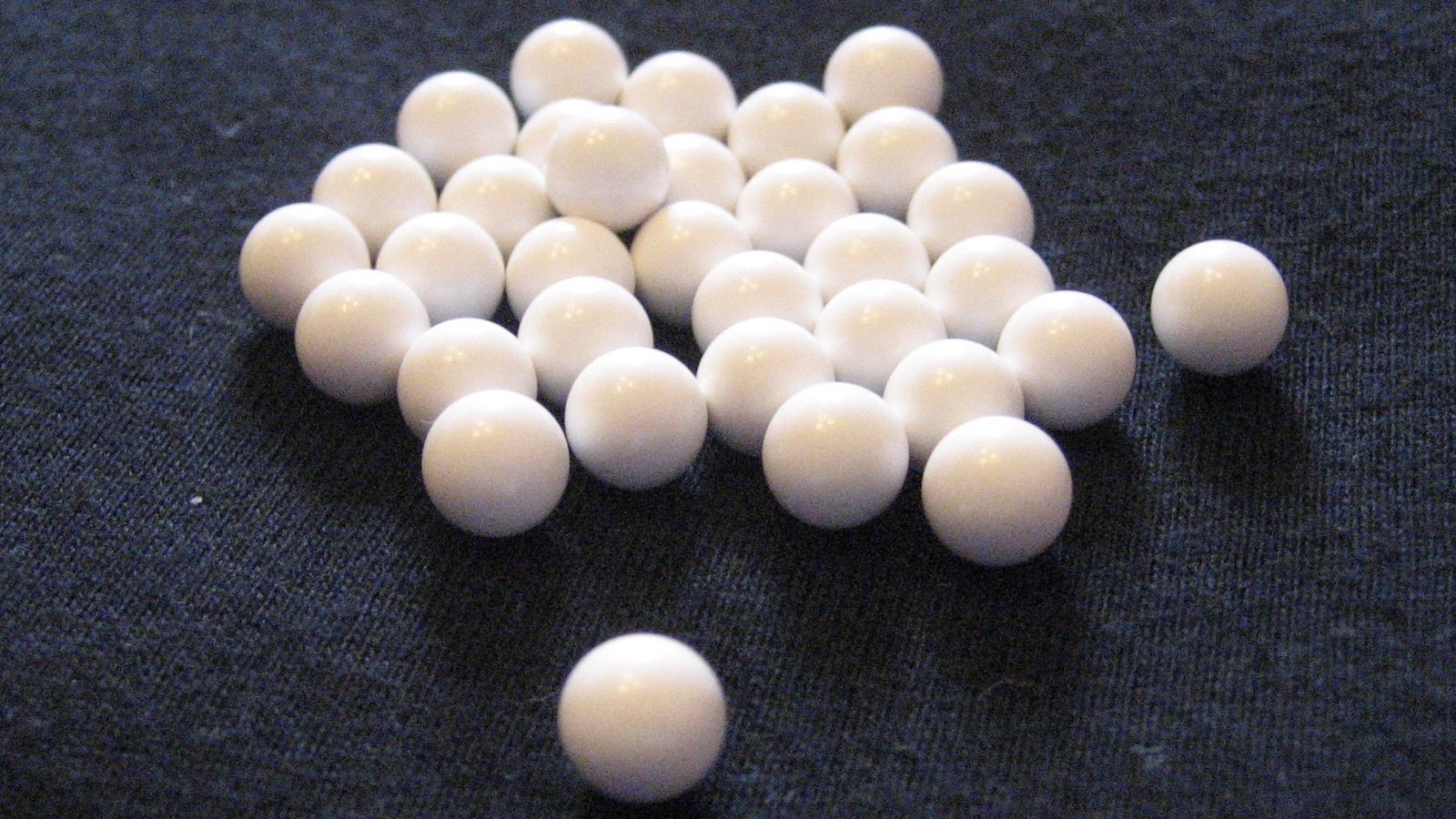
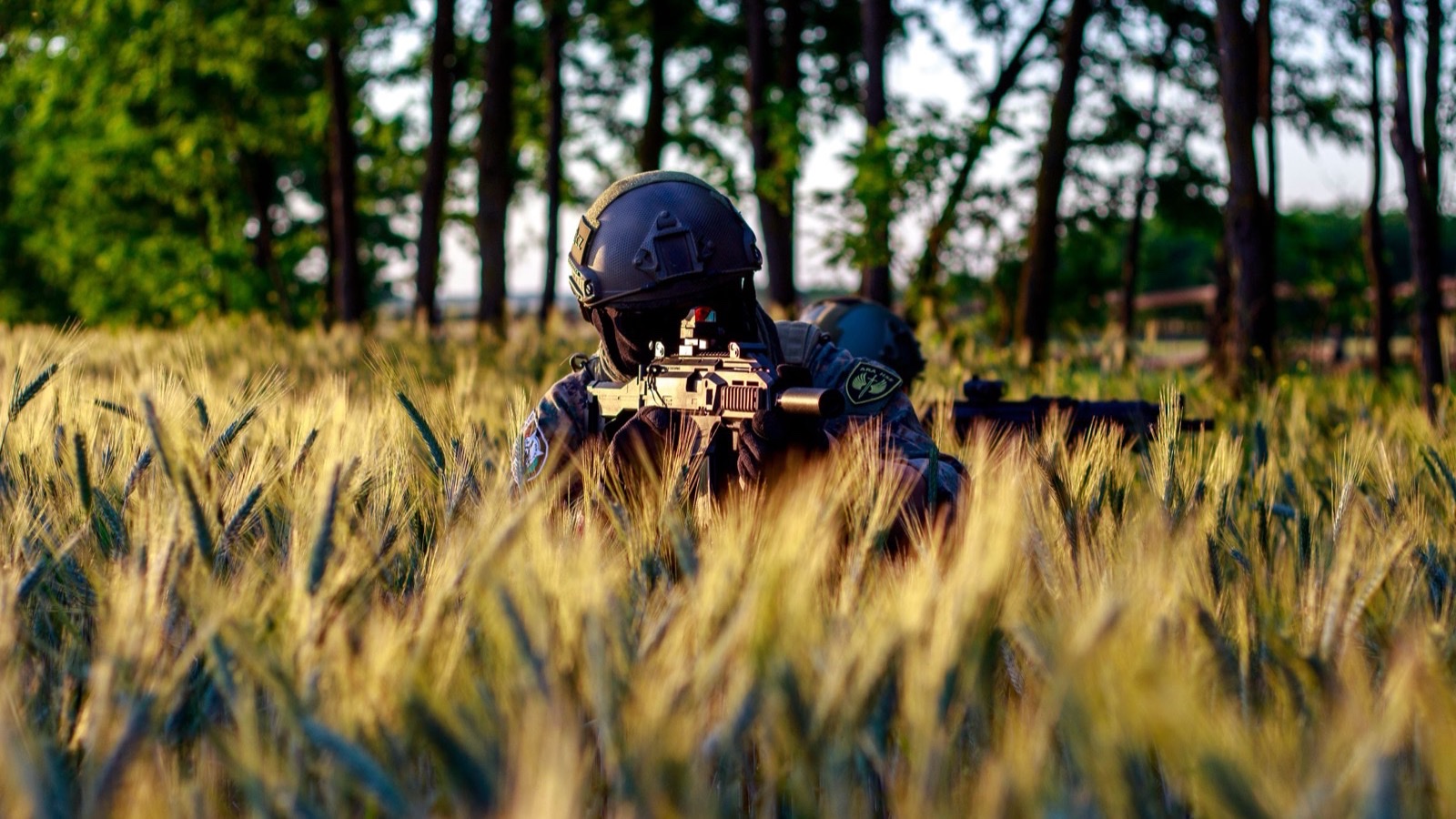
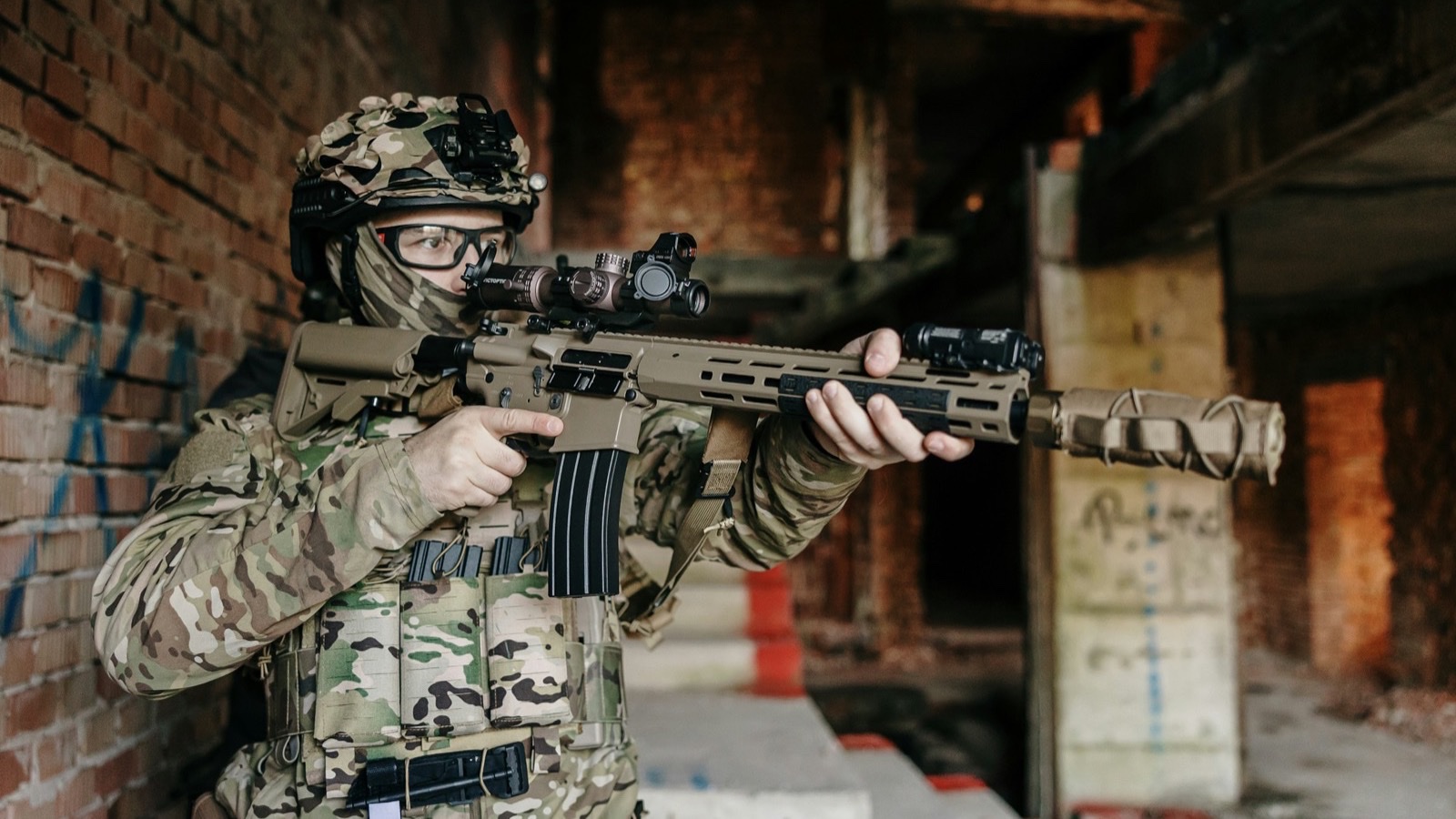
Cover: Airsoft pellets 0.20g by Sorruno, Wikimedia Commons, CC BY-SA 4.0, cropped to 16:9. Airsoft player in a wheat field by Tóth Viktor on Pexels (Pexels License). Player in a ruined building by Taiwangun and airsoft sniper in a ghillie by Specna Arms, both on Unsplash (Unsplash License). The photos are illustrations of airsoft play and don’t show any specific BB brand or weight test from this article.

BB weight is one of the few airsoft upgrades that costs a few dollars and needs no tools. The physics is simple once you see it. Light BBs win by a few hundredths of a second up close and lose by half a second at range. Heavier BBs overtake at about 25-30 metres on any gun. Wind is where the difference really shows. Start from the chart, retune your hop every time you change weight, and settle it with ten timed shots per weight on a real target.
If you’re choosing a gun to pair with heavier BBs, start with the best AEG guide. If you want your timed strings and splits saved without a notebook, the shot timer app guide shows how to set up drills on your phone.
 Airsoft Shot Timer
Put a Shot Timer in Your Pocket
Automatic airsoft shot detection, split times, multiple PAR times and training records — no sign-up.


Related articles