Complete Guide to Pistol Red Dot Sights: From Selection to Training
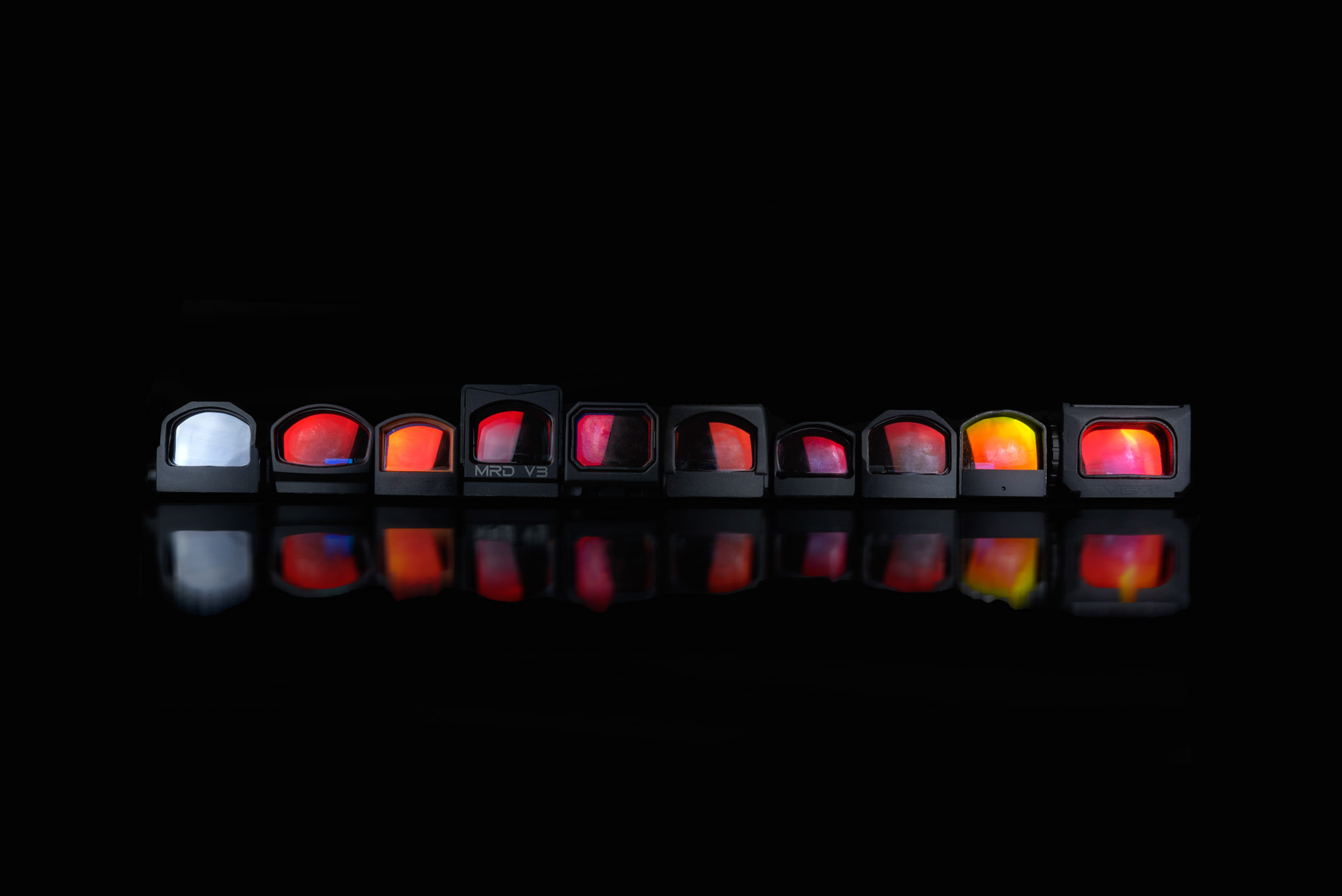
Why Red Dot Sights Are Changing Pistol Shooting
Over the past decade, pistol red dot sights (RDS) have evolved from exclusive competition gear to standard equipment for mainstream shooters. Whether for IPSC/IDPA competition, self-defense, or everyday practice, more shooters are choosing to mount red dots on their handguns.
The reason for this revolution is simple: red dot sights fundamentally change how you aim. Traditional iron sights require you to align three focal points simultaneously—rear sight, front sight, and target. But the human eye can only focus on one plane at a time, making iron sight proficiency require extensive practice.
Red dot sights only require you to focus on the target, and the dot automatically “projects” into your field of vision. This single focal point aiming method not only aligns better with how our eyes naturally work but also makes target acquisition and shot tracking more intuitive.
This guide will help you understand the various types of red dot sights, how to choose the right one for your needs, and how to train effectively to maximize the advantages of a red dot.
💡 Further Reading: Want to learn how to use red dots in competition? Check out our IPSC Production Optics Beginner’s Guide
Types of Red Dot Sights Explained
Open Emitter vs Enclosed Emitter
Red dot sights are mainly divided into two categories:
Open Emitter
Open emitter red dots have the emitter exposed to the environment. Representative models include Trijicon RMR, Holosun 507C, etc.
Advantages:
- Generally larger windows with more open field of view
- Lighter weight
- Relatively lower price
- More options available
Disadvantages:
- Emitter can be blocked by dust, oil, or debris
- May accumulate pocket lint during concealed carry
Enclosed Emitter
Enclosed emitter red dots have the emitter completely protected inside. Representative models include Holosun 509T, Aimpoint ACRO P-2, etc.
Advantages:
- Emitter protected from dust and debris
- Better suited for concealed carry (EDC)
- Overall more rugged and durable
Disadvantages:
- Relatively smaller window
- Slightly heavier
- Usually more expensive
| Type | Best For | Representative Models |
|---|---|---|
| Open | Competition, range training | RMR, SRO, 507C |
| Enclosed | Concealed carry, duty use | 509T, ACRO P-2, EPS |
Red Dot Size: Choosing Your MOA
MOA (Minute of Angle) represents the size of the red dot. At 100 yards, 1 MOA equals approximately a 1-inch diameter circle.
Common MOA Size Comparison
| MOA | Size at 25 Yards | Size at 100 Yards | Characteristics |
|---|---|---|---|
| 2 MOA | ~0.5 inch | ~2 inches | Most precise, ideal for long range |
| 3 MOA | ~0.75 inch | ~3 inches | Balance of precision and speed |
| 6 MOA | ~1.5 inches | ~6 inches | Fast acquisition, ideal for close range |
How to Choose MOA Size?
Choose smaller MOA (2-3 MOA) when:
- Competition shooting requiring precise hits on distant targets
- Prioritizing accuracy over speed
- Good eyesight, don’t mind slightly slower dot acquisition
Choose larger MOA (5-6 MOA) when:
- Self-defense or close-range rapid shooting
- Need to find the dot quickly under stress
- Have astigmatism (larger dots are easier to identify)
- New to red dots
💡 Recommendation: Starting with 3 MOA is a good choice for most shooters. It provides a balance between precision and speed, suitable for most scenarios.
2025-2026 Popular Red Dot Recommendations
Trijicon RMR Type 2 — The Durability Standard
Price: ~$549
The Trijicon RMR (Ruggedized Miniature Reflex) is the legendary representative of pistol red dots. Since its introduction 15 years ago, the RMR has accumulated countless real-world validations in military/law enforcement duty and competition shooting.
Advantages:
- Industry’s most rugged design, passes extreme impact tests
- Excellent optical quality
- High resale value
- Widest accessory and holster support
Disadvantages:
- Higher price
- Relatively smaller window
- Button operation less intuitive than competitors
- No solar backup
Best For: Duty use, shooters demanding absolute reliability
Trijicon SRO — King of Competition
Price: ~$500+
The Trijicon SRO (Specialized Reflex Optic) is designed specifically for competition shooting, featuring the industry’s largest window.
Advantages:
- Extra-large window, extremely fast target transitions
- Excellent optical clarity
- 1 MOA option for ultimate precision
- Competition shooter’s first choice
Disadvantages:
- Less durable than RMR
- Not suitable for concealed carry or duty use
- Larger window adds weight
Best For: IPSC, USPSA competition shooters
Holosun 507C X2 — Best Value
Price: ~$309
The Holosun 507C is currently the most feature-rich mid-price red dot on the market. It offers many premium features at half the price of an RMR.
Advantages:
- Multiple reticle options (dot, circle, circle+dot)
- Solar backup + ultra-long battery life
- Shake Awake auto-wake function
- RMR-compatible footprint, abundant accessories
Disadvantages:
- Durability slightly less than Trijicon
- Brand image not as premium as Trijicon
Best For: Value-conscious shooters, beginner to advanced users
Holosun 509T — Best Enclosed Option
Price: ~$360-460
The 509T is the representative of enclosed emitter designs, offering excellent protection at a mid-range price.
Advantages:
- Titanium housing, rugged and durable
- Enclosed design protects emitter
- Also supports Shake Awake and multiple reticles
- Suitable for harsh environments
Disadvantages:
- Requires dedicated footprint (not RMR compatible)
- Smaller window than open emitters
Best For: Concealed carry (EDC), duty use
Holosun EPS Carry — Best for Concealed Carry
Price: ~$350
The EPS Carry is an enclosed red dot designed specifically for compact carry pistols, with an extremely compact profile.
Advantages:
- Ultra-compact, only 0.95 inches tall
- Enclosed emitter
- Perfect for Glock 43X, Sig P365, and similar compact pistols
Disadvantages:
- Very small window
- Shorter battery life
Best For: Concealed carry with compact pistols
Quick Selection Comparison Chart
| Model | Type | Best For | Price Range |
|---|---|---|---|
| Trijicon RMR Type 2 | Open | Duty/Durability | ~$549 |
| Trijicon SRO | Open | Competition | ~$500+ |
| Holosun 507C X2 | Open | Best Value | ~$309 |
| Holosun 509T | Enclosed | Duty/EDC | ~$360-460 |
| Holosun EPS Carry | Enclosed | Compact EDC Pistols | ~$350 |
| Holosun 407C | Open | Budget Option | ~$249 |
How to Zero Your Red Dot
Proper zeroing is the first step to making your red dot work effectively. Here’s the complete zeroing process:
Step 1: Confirm Secure Installation
Before zeroing, ensure your red dot sight is properly installed and tightened. A loose optic will cause zero shift.
Step 2: Choose Zero Distance
Recommended Zero Distances:
- 15 yards: Suitable for self-defense, most defensive situations occur at 7-15 yards
- 25 yards: Suitable for competition, provides better long-range precision
Step 3: Use a Stable Platform
Shoot from a stable bench rest or sandbags to eliminate human factors.
Step 4: Fire a Verification Group
- Using a consistent point of aim, fire 3-5 shots
- Observe the shot group location
- Calculate the deviation between the group center and target point of aim
Step 5: Adjust the Red Dot
Adjust the red dot based on deviation:
- Hitting right: Adjust the dot left
- Hitting left: Adjust the dot right
- Hitting high: Adjust the dot down
- Hitting low: Adjust the dot up
Most red dots have 1 MOA/click adjustments, meaning at 100 yards, each click moves the point of impact approximately 1 inch.
Step 6: Confirm Zero
After adjustment, fire another group of 3-5 shots to confirm the shot group aligns with your point of aim.
Co-Witness: Coordinating Red Dot with Iron Sights
Co-witnessing refers to making both the red dot and iron sights visible simultaneously, providing a backup aiming method.
Two Types of Co-Witness
Absolute Co-Witness
The front and rear iron sights are completely centered in the red dot window, with the dot aligned at the top of the front sight.
Advantages:
- Familiar sight picture
- Iron sights always available
Disadvantages:
- More elements in the window
- May interfere with rapid aiming
Lower 1/3 Co-Witness
The iron sights are positioned in the lower third of the red dot window, with the dot floating above the front sight.
Advantages:
- Cleaner field of view
- Dot is more prominent
- Preferred by modern shooters
Disadvantages:
- Need to adjust head position when switching to irons
Important Reminder
Do not zero your red dot using only the front sight! The red dot and front sight are on different planes. If you only align the front sight to adjust your red dot, you’ll create serious zeroing errors. The red dot must be zeroed independently.
Sight Height Requirements
Most factory pistol sights are too short to co-witness with red dots. You’ll need:
- Suppressor Height Sights: Suitable for Absolute Co-Witness
- Dedicated Red Dot Backup Sights: Choose appropriate height based on your red dot model
Training for Red Dot Transition with Shot Timer
Transitioning from iron sights to a red dot requires rebuilding muscle memory. Here’s how to use a Shot Timer for systematic training:
Training Focus 1: Finding the Dot
The most common problem for newcomers is “can’t find the dot” or “need to shake the pistol to find it.” This is usually due to inconsistent presentation.
The Tape Trick:
- Ensure the pistol is cleared and unloaded
- Cover the front lens of your red dot with blue painter’s tape
- Conduct dry fire draw practice
- You’ll discover—even without seeing the target, you can still see the dot
- This forces you to maintain target focus rather than searching for the dot
Shot Timer Training:
- Use Airsoft Shot Timer App to set delayed start
- Practice time from ready position to finding the dot
- Goal: Complete draw and find the dot within 1.5 seconds
Training Focus 2: Target Focus vs Dot Focus
Correct Method: Focus on the target, let the dot “appear” in your field of vision
Incorrect Method: Focus on the dot, try to precisely align the dot on the target
Target focus allows you to track the dot’s movement through recoil more quickly and fire the next shot as soon as the dot returns to target.
Training Focus 3: Dot Tracking
One of the biggest advantages of red dot sights is you can see the dot’s movement path through recoil.
Training Method:
- Set a PAR time (e.g., 2.5 seconds)
- Run a Bill Drill (6 rapid shots)
- Focus on observing the dot’s movement path
- Ideal state: The dot should move vertically up and down
- If the dot moves diagonally or erratically, your grip or stance needs adjustment
💡 Further Reading: Want to learn more about Bill Drill and other drills? Check out our Complete Guide to Classic Shooting Drills
Training Focus 4: Transition Shooting
Red dot sights have a clear advantage in multi-target transitions.
Blake Drill Practice:
- Set up two targets, spaced about 1-2 meters apart
- Record with Shot Timer
- Fire 2 shots at the first target
- Transition to the second target and fire 2 shots
- Record “Split Time,” goal is 0.3-0.5 seconds per transition
IPSC/IDPA Competition Rules Highlights
IPSC Red Dot Divisions
Production Optics (PO):
- Must use red dot sight
- Use IPSC Production approved list pistols
- Magazine capacity limited to 15 rounds
- Can only mill slide for optic mounting, other modifications restricted
2025 New Rule: Standard Optics (Trial):
- Similar to Standard division rules + mandatory red dot
- Allows Major and Minor scoring
IDPA Red Dot Divisions
Carry Optics (CO):
- Allows slide-mounted red dot
- Optic cannot be attached to the frame in any way
- Same ESP division rules apply
- Visible lasers are permitted
Common Considerations
- Red dot must be 1x (non-magnifying)
- Weapon lights not allowed (except IPSC Open division)
- Red dot must be mounted on the slide, not the frame
Frequently Asked Questions
Q1: Will a red dot affect my pistol’s reliability?
Modern red dot sights are very reliable, but they do add a potential failure point. Choosing high-quality optics, proper installation, and regularly checking tightness can minimize risk.
Q2: I have astigmatism. Can I use a red dot?
Yes, but astigmatism will make the dot appear blurry or distorted. Suggestions:
- Choose larger MOA (6 MOA) dots
- Try green dots (some astigmatism sufferers respond better)
- Consider using circle dot reticles
- Test different brands in person, as astigmatism effects vary by individual
Q3: How often should I replace the battery?
This depends on the model and usage habits:
- Optics with Shake Awake (like Holosun) can last 50,000 hours
- Traditional always-on designs last about 2-4 years (at low brightness)
- Recommend replacing battery annually for reliability
Q4: Do I need a special holster for a red dot?
Yes. The red dot changes the pistol’s profile, so original holsters usually won’t work. You’ll need:
- A holster specifically designed with a cutout for your specific red dot
- Or an adjustable universal red dot holster
Q5: How do I clean a red dot sight?
- Gently wipe the lens with a microfiber cloth
- Avoid using alcohol-based cleaners
- Enclosed red dots require less frequent cleaning
- Regularly check if the emitter is blocked by dust
Q6: How long does it take to adapt from iron sights?
This varies by individual, but generally requires:
- Basic familiarity: 500-1000 rounds
- Natural flow: 2000-3000 rounds
- Complete mastery: 5000+ rounds
Extensive dry fire practice can accelerate this process.
Q7: Which is faster, red dot or iron sights?
With proper training, red dots are usually faster, especially for:
- Non-standard shooting positions
- Multi-target transitions
- Shooting on the move
- Low-light environments
However, iron sights have advantages:
- Never run out of battery
- No electronic failures
- No additional investment needed
Q8: Is upgrading to a red dot worth it?
Consider upgrading if you:
- Take shooting training seriously
- Plan to participate in competition shooting
- Have changing vision (presbyopia)
- Are willing to invest time in retraining
If you only shoot casually at the range, iron sights are sufficient.
Conclusion: A Red Dot is an Investment, Not Magic
Pistol red dot sights are a game-changing technology, but they won’t automatically make you a sharpshooter. The value of a red dot is that it lets you see your problems more clearly—unstable grip, prepping the trigger, flinch response—all magnified under the red dot’s feedback.
When investing in a red dot, also invest in training time. Use a Shot Timer for systematic practice, continuously record your progress, and you’ll find the advantages of red dots are very real.
💡 Related Articles: