Airsoft Helmet Guide: FAST vs MICH Tactical Helmets, Accessories & Best Picks for 2026
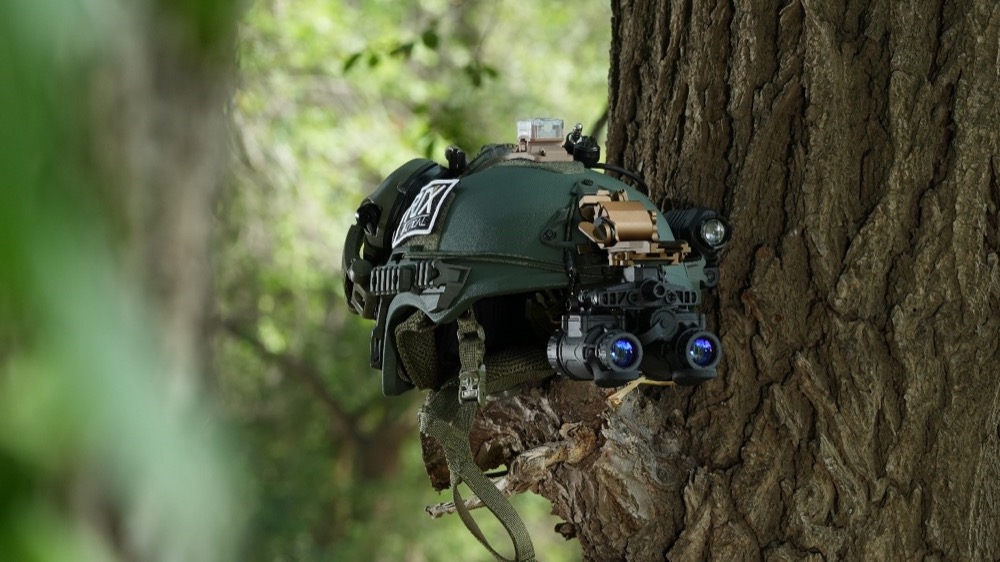
The Most Underrated Piece of Airsoft Gear
When you first get into airsoft, most of your budget goes toward the gun — upgrading the inner barrel, swapping the motor, picking out optics. It feels like accuracy is everything. But after a few games, you discover something nobody warns you about: a BB hitting your unprotected scalp is a special kind of pain. It’s sharper and more startling than a hit on your arm or chest, especially in CQB environments where engagement distances are short and the volume of fire is high. You get tagged on the head far more often than you’d expect.
Beyond just stopping that sting, helmets in modern airsoft have evolved into full-fledged equipment platforms. The NVG mount on the front lets you attach a GoPro or tactical flashlight. Side rails accept headset adapters, IR markers, and accessory clips. Helmet covers match your camo pattern and add hook-and-loop surfaces for patches. A good helmet integrates protection, functionality, and aesthetics into one piece of gear — it’s something every serious player eventually picks up.
The problem is that there are too many choices. FAST, MICH, PJ, BJ, MH — the abbreviations alone are enough to make your head spin. Don’t worry. This guide walks you through helmet types, variant differences, accessory setups, and brand recommendations so you can make a confident decision.
Three Main Helmet Types: FAST, MICH, and Traditional
The tactical helmet market for airsoft breaks down into three broad categories, each with a clear design philosophy and intended use case. Understanding the differences is the first step toward choosing the right one.
FAST Helmet — The Modern Standard
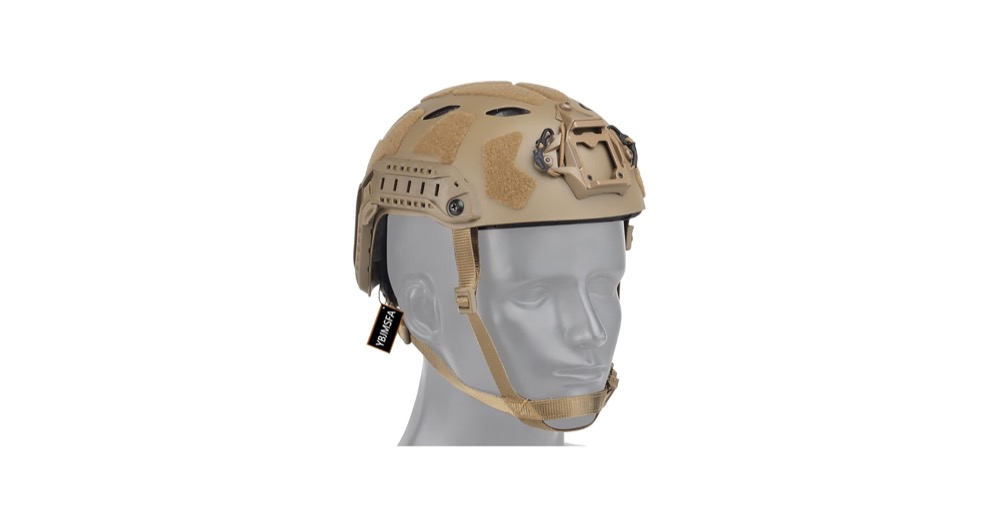
FAST stands for Future Assault Shell Technology, originally developed by Ops-Core for U.S. special operations forces. Its most distinctive feature is the high-cut design — the edges around the ears are aggressively trimmed back to leave room for communication headsets or over-ear hearing protection. If you’ve seen any photos or footage of modern special forces operators, the helmet on their heads is almost certainly a FAST-style design.
The first time you pick up a FAST helmet, you’ll be surprised by how light it is. Airsoft replicas typically weigh between 600 and 800 grams, which is considerably less than most people expect. The ABS shell feels solid without being bulky, and the internal EPP foam pads provide cushioning and comfort. A dial adjustment system at the back lets you quickly dial in the right fit for your head circumference. Once it’s on, the weight distributes evenly across the crown and occipital area — there’s no single pressure point that becomes uncomfortable over time.
What makes the FAST helmet dominant in airsoft is its unmatched expandability. The front NVG shroud accepts cameras and lights, the side rails support a wide range of accessories, and hook-and-loop surfaces let you customize the look with patches and identifiers. It’s a platform, not just a shell.
MICH Helmet — The Classic Mid-Cut
MICH stands for Modular Integrated Communications Helmet, based on the U.S. military’s standard-issue combat helmet design. Compared to the FAST, the MICH’s key difference is its cut height — it provides significantly more coverage around the ears and extends lower at the back of the head. This means better overall protection, but at the cost of reduced ventilation and headset compatibility.
The MICH is ideal for players who don’t need to mount headsets and want maximum head coverage. In outdoor woodland fields, the extra coverage provides real protection when you’re pushing through brush and ducking under low obstacles. The look is also more classic military — if you’re going for a Black Hawk Down or Iraq War-era aesthetic, a MICH fits that vibe better than a FAST.
The downside is heat. Because the MICH covers more area and typically has smaller or no ventilation holes in the crown, hot air gets trapped inside. If you play primarily in warm or tropical climates, this is worth serious consideration — the difference in comfort over a full game day is noticeable.
Traditional Helmets and Half-Shells
Beyond FAST and MICH, you’ll find traditional-style helmets like M1 steel helmet replicas or M88 designs. These typically lack any accessory compatibility — no rails, no NVG mount, just a basic protective shell. They’re suited for themed MilSim events like World War II reenactments, or players on extremely tight budgets. For most people, a FAST or MICH is the more practical choice.
FAST Helmet Variants: PJ, BJ, and MH Explained
The FAST helmet comes in three main variants, and the differences center on ventilation design and rail configuration. Many beginners agonize over this choice, but the practical differences are smaller than you might think.
The PJ variant (Parachute Jumper) has the largest ventilation openings — several large holes cut directly into the crown of the shell. The benefit is excellent heat dissipation, since the top of your head is where the most body heat concentrates. The tradeoff is slightly less shell coverage, though the odds of a BB threading through a vent hole during a game are practically zero. The PJ is the best choice for hot weather and the most popular variant overall.
The BJ variant (Base Jump) has smaller ventilation holes and a more complete shell profile. If the large openings on the PJ bother you aesthetically or you want marginally more coverage, the BJ is a solid middle ground. The real-world temperature difference between PJ and BJ is maybe one or two degrees — noticeable but not decisive.
The MH variant (Maritime Helmet) features an extended side rail system that provides more mounting space along the sides. This is particularly useful if you need to mount multiple accessories simultaneously, such as a headset adapter on one side and an IR marker on the other. If you’re planning a fully loaded setup, the MH’s extra rail real estate is worth having.
For most players, the PJ is the safest entry point. If you’re stuck choosing, go with PJ — you won’t regret it.
Helmet Accessories: From Basic to Advanced
A good helmet is just the starting point — the accessories are what unlock its full potential. Here are the most common and useful helmet add-ons, listed roughly in order of priority.
NVG Mount and Camera Attachment
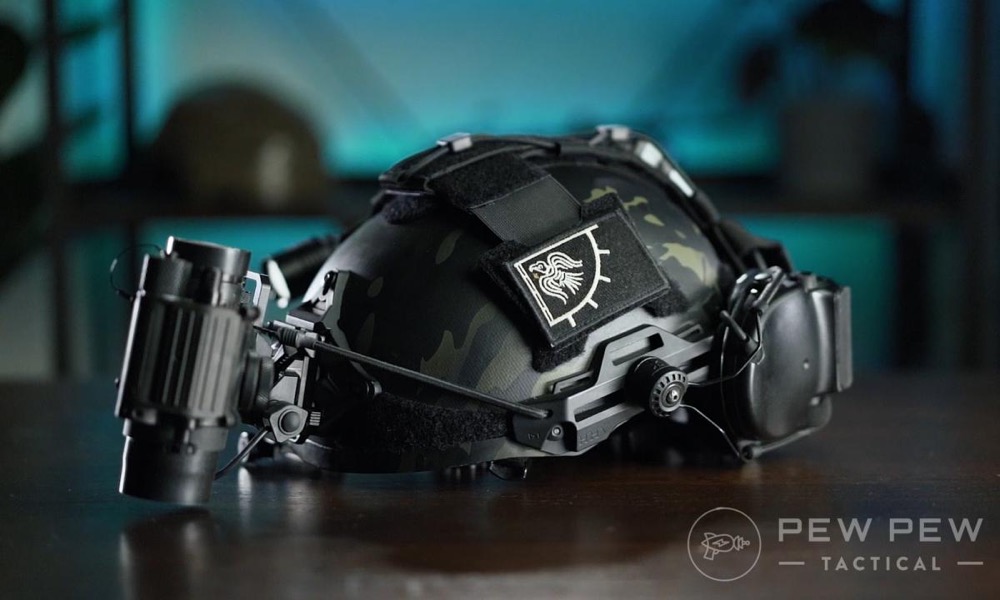
The NVG (Night Vision Goggle) shroud on the front of the helmet is the most frequently used accessory interface. While most airsoft players never mount actual night vision, the shroud is a perfect spot for a GoPro or other action camera. With an inexpensive NVG-to-GoPro adapter — usually under ten dollars — you get a first-person perspective that captures every game. For many players, wanting to film gameplay is what finally pushes them to buy a helmet.
For night games, the NVG mount also works for tactical flashlight brackets and headlamp holders, keeping your hands free to control your weapon while maintaining illumination.
Side Rail Accessories
The side rail system supports a variety of attachments. The most popular use is mounting tactical headset adapters — specifically, ARC rail brackets that let you hang Comtac replicas, Earmor M31/M32 headsets, or similar ear protection directly from the helmet rails instead of using a separate headband. This isn’t just about looks — it’s genuinely more comfortable because the headset weight is borne by the helmet rather than squeezing your ears.
If you’re running a budget setup with Howard Leight Impact Sport electronic earmuffs, compatible ARC rail adapters are available that let you mount them to a FAST helmet. It’s the most affordable way to achieve a helmet-integrated headset configuration.
Other common rail accessories include IR markers for night game IFF (Identification Friend or Foe), side-mounted flashlight clips, and additional hook-and-loop panels.
Helmet Covers and Camouflage
Helmet covers are the fastest way to change your helmet’s appearance. Available in every conceivable camo pattern — Multicam, Ranger Green, AOR1, M81 Woodland — swapping a cover is like getting a brand-new helmet. Most covers include additional hook-and-loop panels and elastic cords where you can tuck in vegetation or scrim netting for enhanced concealment in woodland environments.
Choosing by Playstyle: CQB, MilSim, or Speedsoft
Different game formats have very different helmet requirements. Rather than chasing the “best” helmet, pick the one that best fits how you actually play.
If you mainly play CQB indoors, your head is the most exposed target — helmets are practically essential gear. A FAST PJ is the ideal choice: lightweight, well-ventilated, and slim enough that you won’t catch it on doorframes in tight corridors. Indoor games typically don’t demand heavy accessory setups, so a basic FAST paired with your goggles is plenty. The key detail to get right is ensuring there’s no gap between the helmet’s front edge and the top of your goggles — BBs have a way of finding gaps at close range.
MilSim players have the highest demands. Beyond basic protection, you may need camera mounts, tactical headsets, IR markers, and potentially real night vision for after-dark operations. A FAST MH or high-quality FAST PJ with full accessories is the standard MilSim loadout. A helmet cover is also standard issue for MilSim, because camo integration directly affects your concealment effectiveness.
Speedsoft is the opposite extreme. In a community built around maximum speed and minimum drag, many players skip the helmet entirely in favor of full-face masks like the Dye i4 or i5. If you insist on wearing a helmet, go with the lightest FAST PJ you can find and don’t mount any accessories. Keep your head as light and unencumbered as possible.
Brand Recommendations and Budget Tiers
Airsoft helmets range from roughly $10 to over $100, and quality varies significantly across that spectrum. Here are the brands worth considering at each price point.
At the entry level ($10-25), ATAIRSOFT and AOUTACC are the highest-volume sellers on Amazon. They offer basic ABS shells with adjustable fitting systems and standard rail interfaces. For a first-time buyer who isn’t sure whether a helmet is right for them, these get the job done. Build quality and accessory compatibility can be inconsistent though, so manage expectations.
The mid-range ($25-50) is where most dedicated players find their sweet spot. Emerson and FMA are the leading brands in this tier. Emerson’s higher-end products — particularly in the $35-50 range — are widely considered among the best FAST replicas available. Shell thickness, foam quality, and rail precision are all noticeably better than entry-level options. FMA offers a broader product range from budget to premium; when shopping FMA, look for their newer generation models.
OneTigris deserves a special mention. Originally known for their mesh face masks, they’ve expanded into helmets with strong results. Their MICH 2000 is well-regarded for its light weight, durability, and comfortable adjustment system at a reasonable price. If you want a MICH-style helmet, OneTigris is the first brand to check.
At the high end ($50+), players with generous budgets can look at DragonRed’s premium replicas, or go straight to an Ops-Core FAST Bump (the non-ballistic version). Genuine Ops-Core Bumps run $200-300 overseas — undeniably a luxury for airsoft — but the quality and comfort are in a completely different league.
Usage and Maintenance Tips
Once you’ve got your helmet, a few practical details will make the experience much better. Start with proper adjustment — many people strap on a new helmet and head straight to the field, only to have it bouncing around on their head every time they sprint. Spend a few minutes properly setting the rear dial and chin strap so the helmet sits securely. The correct position places the front edge about one to two centimeters above your eyebrows — not pushed down onto them, and not tilted back to expose your entire forehead.
The internal foam pads will compress and deform over time with regular use. Plan to replace them every six to twelve months. The good news is that most helmets use hook-and-loop mounted pads, making replacement simple, and aftermarket pad kits typically cost just a few dollars.
For cleaning, wipe the shell and chin strap with a damp cloth after each use to remove sweat. The foam pads can be removed and hand-washed or sprayed with rubbing alcohol for disinfection. Don’t submerge the entire helmet or throw it in a washing machine — the ABS shell handles water fine, but prolonged soaking can weaken the adhesives used in the interior assembly.
Conclusion
The right helmet gives you the confidence to peek corners and push aggressively, instead of hiding behind cover because you’re dreading a headshot. Functionally, it’s the platform for your camera, headset, and tactical accessories. Experientially, it’s the piece of gear that makes you hurt less and play more.
If you don’t have a helmet yet, start with a mid-range FAST PJ. Pair it with the goggles and face mask you already own, and try one game with it. Trust me — after that first session, you’ll understand why this guide calls the helmet the most underrated piece of airsoft gear.
📚 Related Articles
- Airsoft Mask & Goggles Complete Guide - Pairing goggles with your helmet
- Airsoft Loadout Complete Guide - Full gear configuration advice
- Airsoft Vest & Plate Carrier Guide - Matching vests with your helmet setup
- Airsoft CQB Tactics Complete Guide - Helmet use in close-quarters combat
- Airsoft Team Tactics Complete Guide - Communication gear and team coordination
- Shooting Safety Rules Complete Guide - Why protective gear matters
- Shot Timer App Complete Guide - Training with Shot Timer
- Airsoft Helmet
- Airsoft
- FAST Helmet
- MICH Helmet
- Tactical Helmet
- NVG Mount
- Airsoft Gear
- MilSim
- CQB
- Speedsoft
- Airsoft Loadout
- Tactical Gear
- Helmet Accessories
- Best Airsoft Helmet