Airsoft Mask & Goggles Complete Guide: Safety Standards, Anti-Fog Solutions & 5 Protection Types Compared
The Most Important Gear You’ll Ever Buy
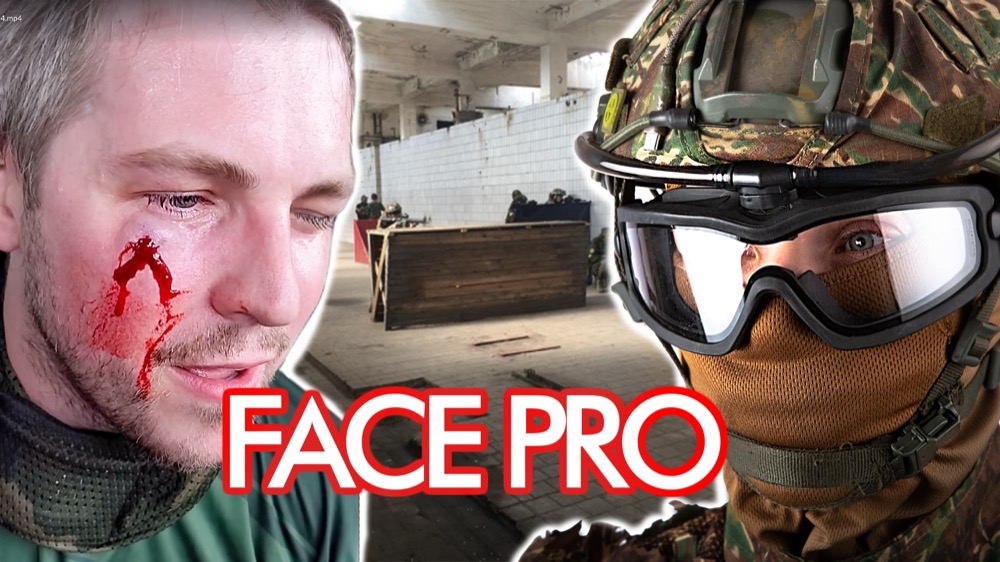
When newcomers walk onto an airsoft field for the first time, most are focused on their gun — the model, the FPS, how many magazines they’re carrying. But the safety officer checking you in doesn’t care about any of that. The first thing they inspect is whether your eyes and face are properly protected. And for good reason: a 6mm BB at close range carries enough energy to cause permanent eye damage. It’s the one truly irreversible risk in airsoft.
Choosing the wrong face protection isn’t just about pain tolerance. Substandard goggles can shatter on impact. A mask that fogs up in three minutes forces you to lift it for a quick wipe — and that one second of exposed eyes is exactly when a BB finds its mark. Every year, players suffer eye injuries from “just quickly lifting my goggles to clear the fog.” Almost every one of these incidents could have been prevented with proper face and eye protection.
This guide breaks down safety certification standards, the pros and cons of five major protection types, and practical solutions to the fogging problem that plagues every airsoft player. Whether you’re a weekly regular or suiting up for the first time, ten minutes spent understanding this topic is worth more than an extra magazine.
Understanding Safety Standards
When shopping for masks and goggles, you’ll see certifications like ANSI Z87.1, EN166B, and MIL-PRF printed on packaging. These aren’t marketing fluff — they determine whether your gear can actually protect your eyes when it matters.
ANSI Z87.1 is the American National Standards Institute’s eye protection specification. There’s a critical distinction here: “Z87” and “Z87+” are two entirely different ratings. Plain Z87 only indicates basic protection without impact resistance testing. Z87+ means the product has passed high-velocity impact testing, with goggles rated at 4.4 joules. For typical airsoft muzzle energies, Z87+ certified goggles provide adequate protection. If you regularly play at high-FPS fields or want extra peace of mind, step up to military-spec products.
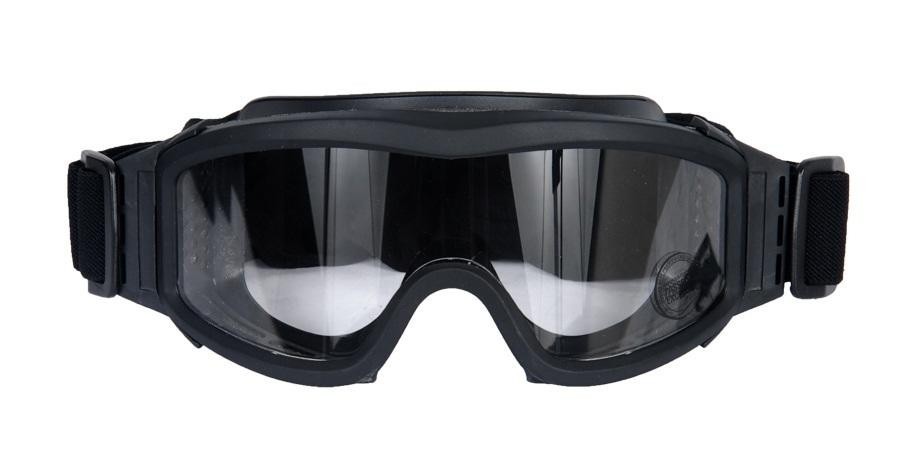
EN166 is the European standard, divided into F, B, and A ratings. F-rated protection handles just 0.87 joules — completely inadequate for airsoft. B-rated handles 6.2 joules, tested by firing a 6mm steel ball at 120 meters per second into the lens. This standard covers the vast majority of airsoft scenarios. A-rated handles up to 15.5 joules, which is essentially ballistic-grade protection. If you’re buying goggles in Europe, look for EN166B or higher.
MIL-PRF refers to U.S. military performance specifications. MIL-PRF-32432 testing reaches 7.67 joules for spectacles and 16.05 joules for visors, far exceeding airsoft requirements. Military-spec goggles from brands like ESS, Revision, and Oakley SI are more expensive but offer unquestionable quality and protection.
One important principle: simply seeing “ANSI Z87.1” or “EN166” on the box doesn’t guarantee the product is safe for airsoft, because each standard contains multiple sub-ratings. Always check the specific rating level, and don’t be misled by vague marketing claims like “meets ANSI standards.”
Five Types of Airsoft Face Protection
Face protection in airsoft falls into five main categories, each with clear use cases and trade-offs. Understanding the differences helps you pick the right setup for your playstyle.
Mesh Half-Mask + Goggles Combo
This is the most popular setup in airsoft today. A steel mesh mask covers the lower face to protect your mouth and teeth, while safety-rated goggles protect the eyes. The reason this combo dominates is simple: mesh masks cannot fog up. They’re essentially perforated metal — air flows freely through them. You can breathe without restriction, communicate clearly with teammates, and never deal with trapped hot air against your face.
The OneTigris foldable mesh mask is probably the most iconic product in this category. At around fifteen dollars, it folds flat for easy storage, withstands impacts up to 800 FPS, and features padded nylon fabric edges that prevent the metal from rubbing against your skin. The dual elastic strap design secures firmly beneath your goggles, and most players report wearing it comfortably for entire game days.
The downside is the inevitable gap between the mesh mask and goggles, particularly around the nose bridge. At very close range, BB fragments have a small chance of entering through these gaps. Additionally, mesh cannot completely block BB fragments — at point-blank range with high-FPS guns, shattered BB pieces can pass through the mesh holes. For the vast majority of situations, though, this combo provides more than adequate protection.
Full-Face Paintball Masks
For maximum convenience and comprehensive protection, paintball masks are the best option. Their one-piece design simultaneously covers eyes, face, and ears with no compatibility issues between separate components. Paintball mask lenses are typically dual-pane thermal lenses, offering dramatically better fog resistance than standard goggles.
The Dye i4 and Dye i5 are the two most widely used paintball masks in airsoft. The i4’s defining feature is its low profile — when shouldering your gun, the mask stays out of your sight picture. This makes it extremely popular among MilSim players and rifle users. The i5 is roughly 20% larger, providing better chin and ear coverage. Its GSP Pro strap features a precision dial adjustment that delivers a more customized fit than the i4’s traditional buckle system. The i5 also features replaceable foam inserts — a practical design choice since foam is the first component to degrade from sweat exposure.
The main drawback of paintball masks is bulk. In CQB environments, a larger mask means more of your head is exposed when peeking corners. Some paintball masks also prevent you from getting a solid cheek weld on your stock, affecting your ability to use red dot or iron sights effectively. Always try before you buy to confirm you can properly shoulder and aim your gun.
Tactical Goggles (Standalone)
Some players prefer just goggles without lower face protection. This is permitted at certain fields and provides the best peripheral vision and breathability. Quality tactical goggles create a complete seal around the eye socket, leaving no angle for BBs to enter.
When choosing standalone tactical goggles, the most critical factor is confirming a “full seal” design rather than open sport-sunglasses-style frames. The ESS Profile NVG, Smith Optics OTW, and Revision Desert Locust are all military-proven models with unquestionable protection. Prices range from $30 to $80 — a worthwhile investment considering they’re protecting your eyes.
The cost of running goggles alone is that your mouth and teeth have zero protection. Getting hit in the lips or teeth by a BB is an experience that only needs to happen once before you add a mesh mask. This is especially relevant in CQB environments where engagement distances are short and BB velocity at impact is high.
Full-Face Balaclava Mesh Masks
These combine a fabric hood with an integrated mesh mouth guard, pulling over your entire head with only the eye area left open for goggles. The advantage is maximum coverage — head, ears, neck, and face are all protected. The OneTigris Ninja Style Balaclava Mesh Mask is the benchmark product in this category.
They work well in cold weather since the fabric provides insulation. However, wearing one in summer is oppressively hot, and forehead sweat flows more easily into your goggles, worsening fog issues. Best suited for MilSim players or those who prioritize comprehensive coverage.
Hybrid Mesh Masks
A newer design that places steel mesh only over the mouth and nose area, with soft nylon fabric on the sides. These hybrid masks conform better to different face shapes, reducing the gap between mask and goggles. The soft sides are also more comfortable, particularly for players with smaller faces where rigid full-mesh masks often don’t fit well. They typically cost only a few dollars more than standard mesh masks — a worthwhile upgrade.
Anti-Fog: The Universal Airsoft Struggle
If airsoft players voted on their biggest frustration, goggle fogging would win in a landslide. You’re coordinating a flanking maneuver with your squad when your lenses start clouding from the edges. Within seconds, your entire field of view is gone. You either stand still waiting for it to clear, or risk lifting your goggles to wipe — exactly the kind of moment that gets someone hurt. Every airsoft player has at least one memory of being lit up while completely blind from fog.
The physics are straightforward: warm air from your face hits the cooler lens surface and condenses into water droplets. Higher exertion, colder weather, and greater humidity all make it worse. The real solution isn’t a single product — it’s attacking the problem from multiple angles simultaneously.
The first line of defense is the lens itself. Dual-pane thermal lenses are the most effective passive anti-fog solution available. They work like double-glazed windows — the air gap between two lens layers provides insulation that dramatically reduces the temperature differential between inner and outer surfaces, addressing the root cause of condensation. Paintball masks almost universally come with thermal lenses, which is the primary reason their fog performance vastly outperforms standard goggles. If your goggles support lens replacement, investing in a thermal lens is the highest-value anti-fog upgrade you can make.
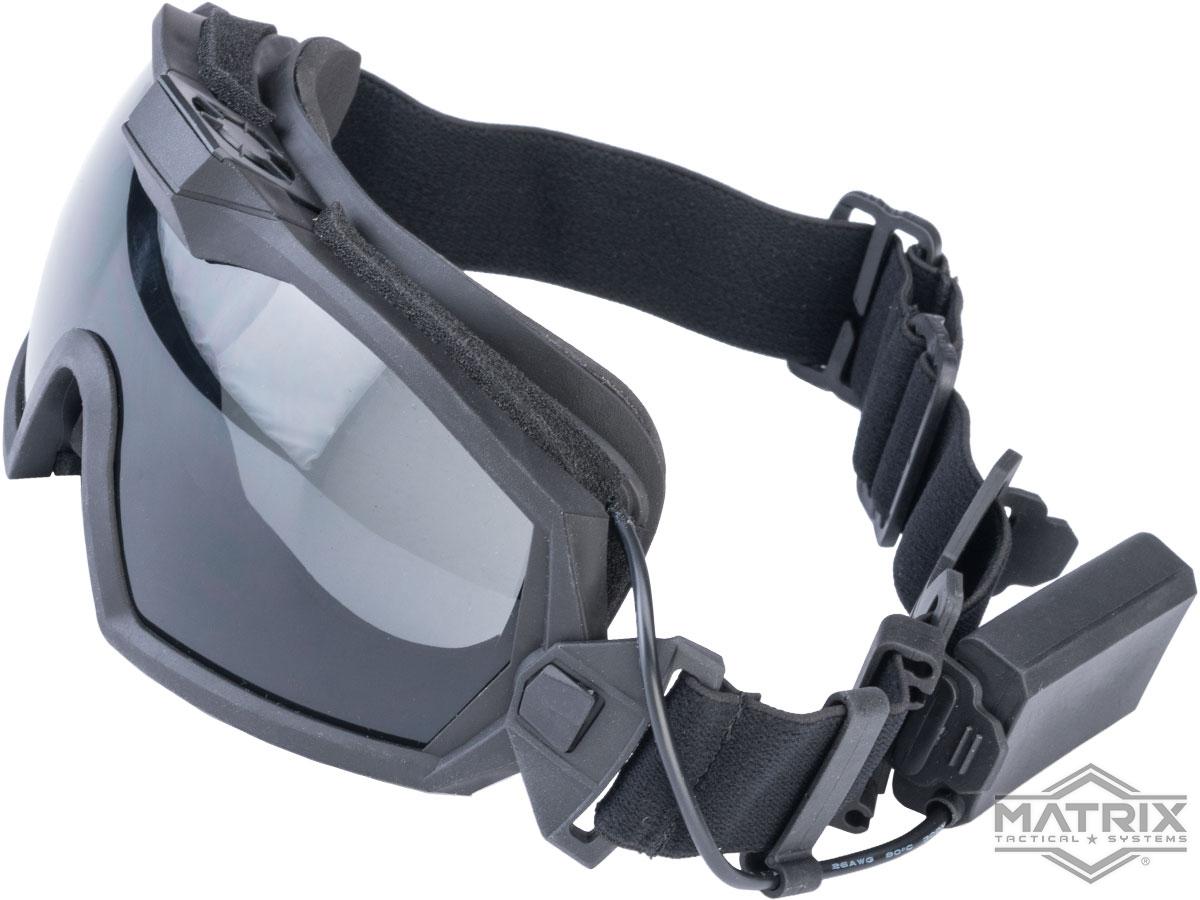
The second line of defense is airflow. Fan-equipped goggles mount small electric fans on the frame to continuously exhaust warm, humid air from inside the lens chamber. ESS, Smith Optics, and WoSport all offer fan goggle models. The results are excellent — fans eliminate roughly 90% of fogging situations. The trade-offs are battery life (typically 4-6 hours), slight fan noise, and cost. Quality fan goggles run $40-80. The ExFog system offers an external alternative, attaching to any existing goggle and piping fresh air to the lens interior through tubes.
The third line of defense is chemical coatings. Anti-fog sprays and balms are the cheapest option. Cat Crap — a product whose name is funnier than its performance is serious — applies a thin coating to the lens interior that prevents condensation for several hours. Chemical coatings do degrade over time and with sweat exposure, typically requiring reapplication every 2-3 games. For a household alternative, a tiny drop of dish soap spread thinly across the inner lens, allowed to dry completely, then buffed with a microfiber cloth works surprisingly well.
One factor most people overlook is nose and mouth positioning. Cloth face coverings like shemaghs or balaclavas channel your warm breath directly upward into your goggles, making them the number-one fog accelerator. Mesh masks completely solve this — the perforated steel doesn’t trap or redirect airflow. Your breath dissipates directly through the mesh openings instead of being funneled up toward your lenses. This is why the “mesh mask + goggles” combo consistently outperforms full-face cloth setups in fog resistance.
Choosing Protection for Your Playstyle
Different playing styles demand very different things from your face protection. In CQB environments, engagement distances are short, facial hits are common, and indoor venues tend to run warm. Both protection and anti-fog performance matter equally. A paintball mask like the Dye i4, or a mesh mask paired with fan goggles, represents the ideal CQB setup.
Speedsoft players prioritize low drag and wide field of view. Most SpeedQB competitors run paintball masks because tournament rules typically mandate full-face protection. The Dye i4’s low-profile design means you don’t feel like you’re wearing a box on your face during aggressive movement — which is why it’s practically standard issue in the Speedsoft community.
Outdoor fields and MilSim present different challenges. Engagement distances are longer, meaning facial impacts carry less energy, but you may need to wear your protection continuously for hours or an entire day. Comfort and breathability become the top priorities. A mesh half-mask paired with military-spec goggles like the ESS Profile NVG or Revision Desert Locust is the classic MilSim combination — light, breathable, and protective enough. Add a balaclava mesh mask if cold weather demands extra warmth.
If you play across multiple environments and budget is limited, “OneTigris mesh mask + Z87+ certified goggles + a bottle of anti-fog spray” runs about $30-40 total and covers every scenario. Once you’ve figured out which type of field you frequent most, upgrade accordingly.
Recommended Brands and Products
For an entry budget of roughly $20-40, the OneTigris foldable mesh mask paired with VOZAPOW or Pyramex I-Force goggles is the most popular combination. The mesh mask handles lower face protection while the goggles should feature ANSI Z87+ certification and dual-pane thermal lenses. The advantage of this combo is that each piece can be independently upgraded without replacing the entire setup.
A mid-range budget of $50-80 opens up options like the Dye i4 paintball mask or ESS Profile NVG goggles paired with a hybrid mesh mask. The Dye i4’s thermal lens offers excellent fog resistance and has earned a stellar reputation among Speedsoft and CQB players. ESS goggles carry military certification with top-tier optical clarity and impact protection, making them ideal for quality-focused MilSim players.
At the $80+ tier, consider the Dye i5 full-face mask or a fan goggle solution. The i5’s replaceable foam and dial-adjust strap deliver the best long-wear comfort available. If you prefer the goggles route, the Smith Optics OTW with integrated fan virtually eliminates fogging, and paired with any half-face mesh mask, represents the ultimate protection setup.
Where Not to Cut Corners
Your mask and goggles might be the least exciting part of your airsoft kit. They don’t turn heads like a custom Hi-CAPA, and they’re not as photogenic as a fully kitted plate carrier. But they are the only piece of gear that’s about safety. Your gun can be repaired, your vest can be replaced — your eyes cannot.
When shopping, keep these principles in mind: verify the specific safety rating (Z87+ or EN166B minimum), always try gear on to confirm comfort and seal, and have an anti-fog strategy ready before your first game. If you’re unsure what to buy, “mesh mask + Z87+ goggles” is the safest starting point. After a few game days, you’ll naturally discover what you need to upgrade.
One final tip: always carry a microfiber cloth and a small bottle of anti-fog spray in your gear bag. No matter how premium your goggles are, there will be moments when they fog up. Being able to handle it quickly during a break is infinitely more useful than complaining about it on the field.
💡 Recommended Reading:
- Airsoft Beginner Complete Guide — Everything you need to know for your first game
- Airsoft Loadout Complete Guide — Build your complete gear setup
- Speedsoft Beginner Guide — Gear requirements for SpeedQB competition
- CQB Tactics Guide — Protection considerations for indoor fields
- Shooting Protection Gear Guide — Protection choices for live-fire shooting
- Airsoft Tactics Guide — Team tactics for outdoor fields
- Airsoft Mask
- Airsoft Goggles
- Airsoft Eye Protection
- Face Protection
- Anti-Fog
- Airsoft
- Dye I4
- Dye I5
- OneTigris
- Safety Gear
- CQB
- Speedsoft
- MilSim